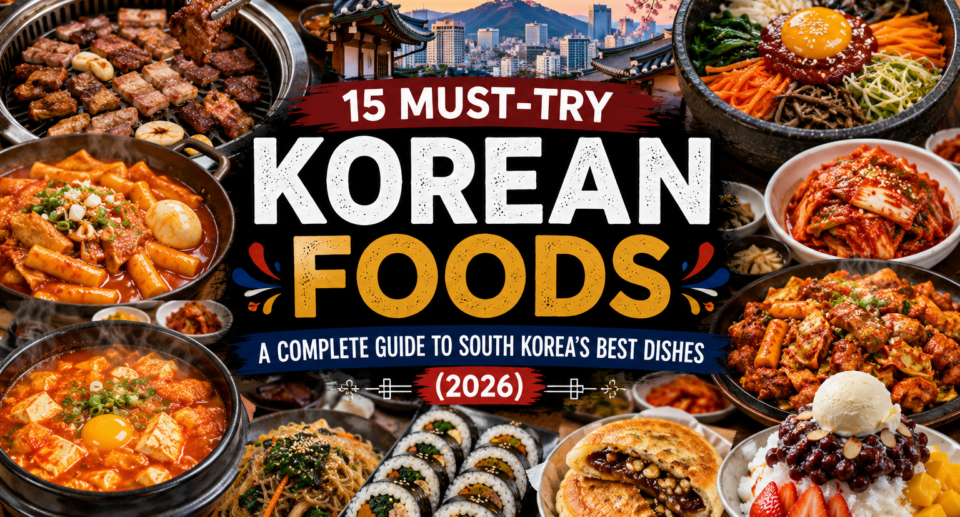
South Korea has become one of the world’s most exciting culinary destinations, blending centuries-old traditions with modern food culture. From sizzling Korean BBQ restaurants and bustling street markets to cozy family-run eateries, every meal offers a unique combination of bold flavors, fresh ingredients, and communal dining experiences.
Korean cuisine is known for its balance of spicy, sweet, savory, and fermented flavors. Staples like kimchi, rice, noodles, grilled meats, and seasonal vegetables create meals that are both comforting and nutritious. Whether you’re exploring Seoul’s vibrant neighborhoods, relaxing on Busan’s coastline, or discovering Jeonju’s traditional food scene, tasting authentic Korean dishes is an essential part of the journey.
Here are 15 must-try Korean foods every traveler should add to their foodie bucket list.
1. Korean BBQ (Samgyeopsal & Galbi)
The Ultimate Korean Dining Experience
Korean BBQ is more than just a meal—it’s a social experience. Diners grill premium cuts of pork belly (Samgyeopsal) or marinated beef short ribs (Galbi) at the table before wrapping them in lettuce with garlic, ssamjang (spicy soybean paste), kimchi, and other side dishes known as banchan.
The combination of smoky grilled meat, fresh vegetables, and flavorful sauces makes Korean BBQ one of the country’s most iconic culinary experiences.
Best Places to Try
Seoul, Suwon
Average Price
₩18,000–45,000 per person
Local Tip
Wrap the grilled meat in lettuce with kimchi, garlic, and ssamjang for the authentic Korean way of eating BBQ.
2. Bibimbap
Korea’s Famous Mixed Rice Bowl
Bibimbap is a colorful bowl of steamed rice topped with seasoned vegetables, sliced beef, a fried egg, and spicy gochujang sauce. Before eating, everything is mixed together to create a perfect balance of textures and flavors.
Jeonju is considered the birthplace of Bibimbap and remains one of the best places to enjoy the dish.
Best Place to Try
Jeonju
Average Price
₩10,000–18,000
Local Tip
Mix every ingredient thoroughly before taking your first bite to enjoy the full combination of flavors.
3. Kimchi
Korea’s Most Iconic Side Dish
Kimchi is South Korea’s national dish and accompanies almost every meal. Made by fermenting napa cabbage or radish with chili flakes, garlic, ginger, and fish sauce, it delivers a unique combination of spicy, tangy, and umami flavors.
With hundreds of regional varieties, Kimchi reflects Korea’s rich culinary heritage and plays an essential role in everyday dining.
Best Places to Try
Nationwide, especially Seoul and Jeonju
Average Price
Usually included free with meals
Local Tip
Try different regional varieties of Kimchi—each has its own flavor profile and fermentation style.
4. Bulgogi
Korea’s Sweet and Savory Grilled Beef
Bulgogi, meaning “fire meat,” is one of South Korea’s most beloved dishes. Thin slices of beef are marinated in soy sauce, sesame oil, garlic, pear, sugar, and black pepper before being grilled or stir-fried to perfection. The result is incredibly tender meat with a delicious balance of sweet and savory flavors.
Bulgogi is commonly served with rice, fresh lettuce wraps, kimchi, and an assortment of banchan (side dishes).
Best Places to Try
Seoul, Gyeongju
Average Price
₩15,000–30,000
Local Tip
Wrap Bulgogi in lettuce with garlic, kimchi, and a little ssamjang for an authentic Korean bite.
5. Japchae
Korea’s Famous Glass Noodle Dish
Japchae is a colorful stir-fried noodle dish made with sweet potato glass noodles, beef, mushrooms, carrots, spinach, onions, and sesame oil. Its slightly sweet flavor and chewy texture make it a favorite during celebrations and holidays.
Today, Japchae is enjoyed year-round and is commonly served as both a side dish and a main course.
Best Places to Try
Seoul, Busan
Average Price
₩10,000–18,000
Local Tip
Freshly prepared Japchae has the best texture, so enjoy it soon after it’s served.
6. Tteokbokki
Korea’s Most Popular Street Food
Tteokbokki features chewy rice cakes simmered in a spicy and slightly sweet gochujang sauce. Many vendors add fish cakes, boiled eggs, scallions, cheese, or ramen noodles to create a heartier meal.
It’s one of the most iconic foods you’ll find in Korea’s bustling night markets and street food districts.
Best Places to Try
Myeongdong (Seoul), Busan
Average Price
₩4,000–8,000
Local Tip
If you’re sensitive to spice, ask for a milder version or pair it with fried snacks (Twigim) to balance the heat.
7. Kimchi Jjigae
Korea’s Comfort Food Soup
Kimchi Jjigae is a hearty stew made with aged kimchi, pork or tuna, tofu, onions, and scallions. The longer the kimchi has fermented, the richer and deeper the broth becomes.
Served bubbling hot with steamed rice, it’s one of Korea’s ultimate comfort foods, especially during colder months.
Best Places to Try
Seoul, Jeonju
Average Price
₩9,000–15,000
Local Tip
Don’t worry if the kimchi tastes sour—that’s exactly what creates the stew’s rich flavor.
8. Samgyetang
Korea’s Nourishing Ginseng Chicken Soup
Samgyetang consists of a whole young chicken stuffed with glutinous rice, garlic, jujubes (red dates), and ginseng before being slow-cooked into a nourishing broth.
Although it’s served piping hot, Koreans traditionally eat Samgyetang during the hottest days of summer, believing it restores energy and helps the body cope with the heat.
Best Places to Try
Seoul, Daejeon
Average Price
₩16,000–25,000
Local Tip
Season the soup with salt and pepper to your taste before enjoying the broth.
9. Jajangmyeon
Korea’s Beloved Black Bean Noodles
Jajangmyeon features thick wheat noodles topped with a rich black bean sauce made from fermented soybean paste, diced pork, onions, and vegetables. Originally influenced by Chinese cuisine, it has evolved into one of Korea’s favorite comfort foods.
It’s especially popular on “Black Day” (April 14), when many single people gather to enjoy a bowl together.
Best Places to Try
Incheon, Seoul
Average Price
₩7,000–12,000
Local Tip
Mix the sauce thoroughly with the noodles before eating to coat every strand evenly.
10. Sundubu Jjigae
Korea’s Spicy Soft Tofu Stew
Sundubu Jjigae is a comforting stew made with silky soft tofu, vegetables, mushrooms, seafood or pork, and a rich broth seasoned with gochugaru (Korean chili flakes). A raw egg is often cracked into the bubbling stew just before serving, creating an extra creamy texture.
Served in a hot stone pot alongside steamed rice and traditional side dishes, it’s one of Korea’s most satisfying everyday meals.
Best Places to Try
Seoul, Busan
Average Price
₩9,000–15,000
Local Tip
Mix the egg into the hot stew immediately after it’s served to create a richer, creamier broth.
11. Naengmyeon
Korea’s Refreshing Cold Noodles
Naengmyeon is a unique Korean noodle dish served chilled, making it especially popular during the hot summer months. Thin buckwheat noodles are served in an icy beef broth (Mul Naengmyeon) or with a spicy chili sauce (Bibim Naengmyeon), often accompanied by cucumber, pear slices, boiled egg, and beef.
Its refreshing flavor offers a welcome contrast to Korea’s spicy cuisine.
Best Places to Try
Pyongyang-style restaurants in Seoul, Busan
Average Price
₩10,000–15,000
Local Tip
Taste the broth before adding vinegar or mustard—many locals enjoy the original flavor first.
12. Gimbap
Korea’s Favorite Grab-and-Go Meal
Often compared to sushi rolls, Gimbap consists of steamed rice, vegetables, egg, pickled radish, and meat or tuna rolled in seaweed. Unlike Japanese sushi, Gimbap is seasoned with sesame oil rather than vinegar, giving it a distinct flavor.
It’s a popular choice for picnics, train journeys, and quick lunches.
Best Places to Try
Seoul, Jeonju
Average Price
₩3,500–7,000
Local Tip
Convenience stores offer surprisingly fresh Gimbap, making it a great budget-friendly meal for travelers.
13. Hotteok
Korea’s Sweet Street Food Pancake
Hotteok is one of Korea’s most popular winter street foods. A soft dough is filled with brown sugar, cinnamon, and chopped nuts before being pan-fried until crispy on the outside and gooey inside.
Modern versions may include cheese, chocolate, green tea, or savory fillings, but the traditional sweet version remains the most beloved.
Best Places to Try
Myeongdong (Seoul), Busan
Average Price
₩2,000–4,000
Local Tip
Eat Hotteok while it’s fresh off the griddle—the molten filling is at its best when served hot.
14. Dakgalbi
Korea’s Famous Spicy Stir-Fried Chicken
Dakgalbi is made by stir-frying marinated chicken with cabbage, sweet potatoes, rice cakes, onions, and spicy gochujang sauce on a large hot plate at the table. Many restaurants finish the meal by adding rice to the remaining sauce, creating delicious fried rice.
Originating in Chuncheon, Dakgalbi has become a favorite group dining experience across Korea.
Best Place to Try
Chuncheon
Average Price
₩12,000–20,000 per person
Local Tip
Save room for the fried rice at the end—it’s considered one of the best parts of the meal.
15. Bingsu
Korea’s Ultimate Summer Dessert
Bingsu is a refreshing dessert made with finely shaved ice topped with sweet red beans, condensed milk, fresh fruit, mochi, cheesecake, mango, strawberries, or matcha, depending on the variety.
Unlike traditional shaved ice desserts, Korean Bingsu has an incredibly soft, snow-like texture that melts in your mouth, making it the perfect treat on a warm day.
Best Places to Try
Seoul, Busan
Average Price
₩10,000–18,000
Local Tip
Most Bingsu servings are large enough to share between two or three people.
Quick Reference Table
| Dish | Best Place to Try | Type | Average Price |
|---|---|---|---|
| Korean BBQ (Samgyeopsal & Galbi) | Seoul | Main Course | ₩18,000–45,000 |
| Bibimbap | Jeonju | Rice Dish | ₩10,000–18,000 |
| Kimchi | Nationwide | Side Dish | Usually Included |
| Bulgogi | Seoul | Main Course | ₩15,000–30,000 |
| Japchae | Busan | Noodle Dish | ₩10,000–18,000 |
| Tteokbokki | Myeongdong | Street Food | ₩4,000–8,000 |
| Kimchi Jjigae | Seoul | Stew | ₩9,000–15,000 |
| Samgyetang | Seoul | Soup | ₩16,000–25,000 |
| Jajangmyeon | Incheon | Noodles | ₩7,000–12,000 |
| Sundubu Jjigae | Busan | Stew | ₩9,000–15,000 |
| Naengmyeon | Seoul | Cold Noodles | ₩10,000–15,000 |
| Gimbap | Seoul | Snack | ₩3,500–7,000 |
| Hotteok | Myeongdong | Street Dessert | ₩2,000–4,000 |
| Dakgalbi | Chuncheon | Main Course | ₩12,000–20,000 |
| Bingsu | Seoul | Dessert | ₩10,000–18,000 |
Local Dining Tips in South Korea
South Korea’s dining culture emphasizes sharing, freshness, and respect. Following these local customs will make your culinary experience even more enjoyable.
Explore Traditional Markets
Markets like Gwangjang Market in Seoul and Jagalchi Market in Busan are among the best places to sample authentic Korean dishes at affordable prices.
Enjoy the Banchan
Most restaurants serve complimentary banchan—small side dishes such as kimchi, pickled vegetables, and seasoned greens. Refills are often free, so don’t hesitate to ask politely.
Grill Meat Properly
At Korean BBQ restaurants, staff may cook the meat for you. If not, grill it slowly and avoid overcrowding the grill for the best flavor.
Don’t Miss Street Food
Night markets are filled with local favorites like Tteokbokki, Hotteok, Gimbap, fish cakes (Eomuk), and fried snacks.
Try Regional Specialties
Every region has signature dishes. Jeonju is famous for Bibimbap, Chuncheon for Dakgalbi, and Busan for fresh seafood.
Food Etiquette in South Korea
- Wait for the eldest person at the table to begin eating before you start.
- Avoid sticking chopsticks upright into a bowl of rice, as it resembles a funeral ritual.
- Use both hands when receiving drinks from an older person.
- Share dishes respectfully and use serving utensils when provided.
- Most Korean meals are enjoyed together, with multiple dishes shared around the table.
Frequently Asked Questions
What is the most famous food in South Korea?
Korean BBQ, Bibimbap, Kimchi, and Tteokbokki are among the country’s most iconic dishes and should be on every traveler’s must-try list.
Is Korean food always spicy?
Not necessarily. While dishes like Tteokbokki and Kimchi Jjigae are spicy, many popular foods—including Bulgogi, Japchae, Samgyetang, and Gimbap—are mild and suitable for most travelers.
Is Korean street food safe?
Yes. Street food is generally safe when purchased from busy vendors with freshly prepared food. Popular markets maintain high turnover, ensuring ingredients are fresh.
What is Korea’s national dish?
Kimchi is widely regarded as South Korea’s national dish and is served with nearly every traditional meal.
What is the best dessert in Korea?
Bingsu is the country’s most famous dessert, while Hotteok is a must-try sweet street food, especially during winter.
Final Thoughts
South Korea’s food culture is a perfect blend of tradition, innovation, and community. Whether you’re grilling premium meats at a Korean BBQ restaurant, enjoying a comforting bowl of Kimchi Jjigae, or wandering through a bustling night market with Hotteok in hand, every meal offers a deeper connection to Korean culture.
From the vibrant streets of Seoul to the coastal flavors of Busan and the culinary traditions of Jeonju, each region brings something unique to the table. Be adventurous, try local specialties, and embrace the Korean tradition of sharing food—you’ll leave with unforgettable memories and a newfound appreciation for one of Asia’s most exciting cuisines.