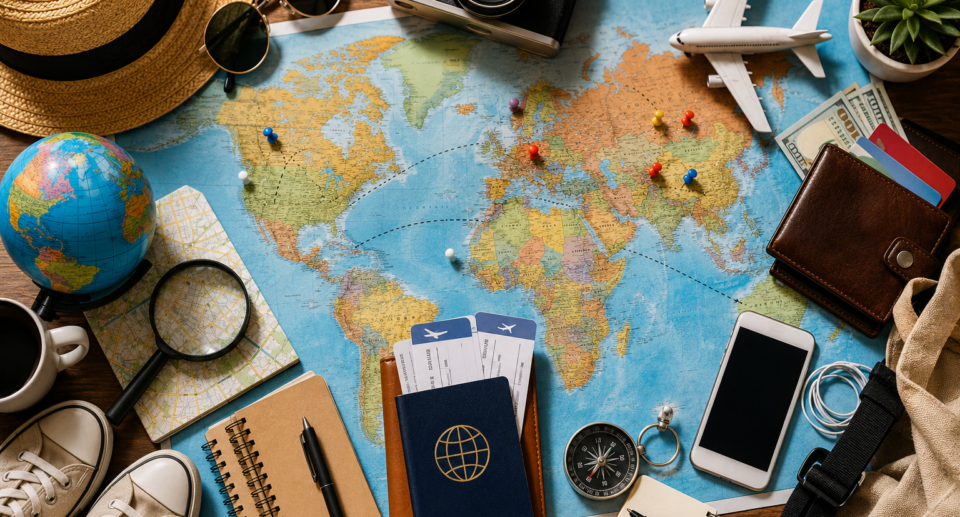
Your first international trip can feel overwhelming — new currency, new customs, unfamiliar systems. These 20 tips will help you travel with confidence, no matter where you’re headed in 2026.
Before You Leave
1. Check Your Passport Expiration
Many countries require your passport to be valid for at least six months beyond your travel dates — check this well before booking flights.
2. Research Visa Requirements Early
Visa rules vary widely by nationality and destination. Some can be arranged on arrival, others require weeks of advance processing — check official government sources, not just travel blogs.
3. Notify Your Bank and Card Provider
Let your bank know your travel dates and destinations to avoid your card being flagged and frozen for suspicious activity abroad.
4. Get Travel Insurance
Even a basic policy can save you thousands if you face a medical emergency, trip cancellation, or lost luggage.
5. Make Copies of Important Documents
Keep digital and physical copies of your passport, visa, and insurance details separate from the originals.
Money & Payments
6. Carry a Mix of Payment Methods
Don’t rely solely on one card — carry a backup card and a small amount of local currency for places that don’t accept cards.
7. Understand ATM and Foreign Transaction Fees
Look for a card with no foreign transaction fees, and use ATMs affiliated with major banks to avoid excessive withdrawal fees.
8. Learn the Local Tipping Culture
Tipping norms vary dramatically — it’s expected and significant in the U.S., modest in much of Europe, and can even be considered rude in parts of Asia.
Staying Connected
9. Set Up an eSIM or International Plan Before You Land
Many countries offer affordable eSIM data plans you can activate before arrival — much cheaper than roaming charges from your home carrier.
10. Download Offline Maps
Google Maps and Maps.me allow you to download maps for offline use — invaluable when you don’t have data or signal.
11. Save Key Addresses in the Local Language
Save your hotel address and key destinations in the local script so you can show them to taxi drivers or locals if needed.
Packing & Practical Prep
12. Pack a Universal Power Adapter
Outlet types vary by country — a single universal adapter with USB ports covers you almost anywhere.
13. Bring Basic Medications
Pack a small first-aid kit with any regular medications, since not everything is easy to find or labeled the same way abroad.
14. Pack Lighter Than You Think You Need
Most first-time travelers overpack. Laundry is available almost everywhere, and lighter luggage makes navigating trains, stairs, and cobblestones far easier.
Culture & Safety
15. Learn a Few Basic Phrases
Even simple greetings and “thank you” in the local language go a long way and are genuinely appreciated.
16. Research Local Customs and Etiquette
Dress codes, dining etiquette, and social norms vary — a little research prevents accidental offense.
17. Register With Your Embassy (Optional but Useful)
Many countries offer a free traveler registration program that can help authorities reach you in an emergency or natural disaster.
18. Keep Emergency Numbers Handy
Save the local emergency number and your embassy’s contact information before you arrive.
On the Ground
19. Be Cautious With Public Wi-Fi
Avoid accessing banking apps on unsecured public Wi-Fi networks; use a VPN if you need to access sensitive accounts.
20. Stay Flexible
Delays, language barriers, and unexpected changes are part of international travel — the best travelers treat these as part of the adventure, not a failure of planning.
Frequently Asked Questions
How far in advance should I start planning an international trip? For visa-required destinations, start at least 6–8 weeks ahead. For visa-free destinations, 2–4 weeks is usually sufficient for flights and accommodation.
Is it better to exchange currency before departure or on arrival? Generally, withdrawing local currency from an ATM on arrival offers better exchange rates than currency exchange counters, especially at airports.
What’s the single most important thing to prepare before international travel? Travel insurance and a passport with sufficient validity are the two things that can derail a trip entirely if overlooked.
Final Thoughts
International travel gets easier every time you do it — but a little preparation before your first trip goes a long way toward making it enjoyable rather than stressful. Keep this checklist handy, and you’ll be ready for whatever your destination throws at you.