New Zealand sits in the Southern Hemisphere, which means its seasons run opposite to North America and Europe — summer falls in December–February, winter in June–August. That alone catches a lot of first-time visitors off guard when planning. Here’s what to actually expect month by month, across both the North and South Islands.
Quick Answer
The best overall time to visit New Zealand is shoulder season — March to May or September to November — you get generally mild weather across both islands, fewer crowds than the December–February peak, and noticeably better prices on accommodation and rental cars.
New Zealand’s Two Islands, Two Different Considerations
- North Island: milder year-round, less weather-dependent, good for city and coastal travel any time of year.
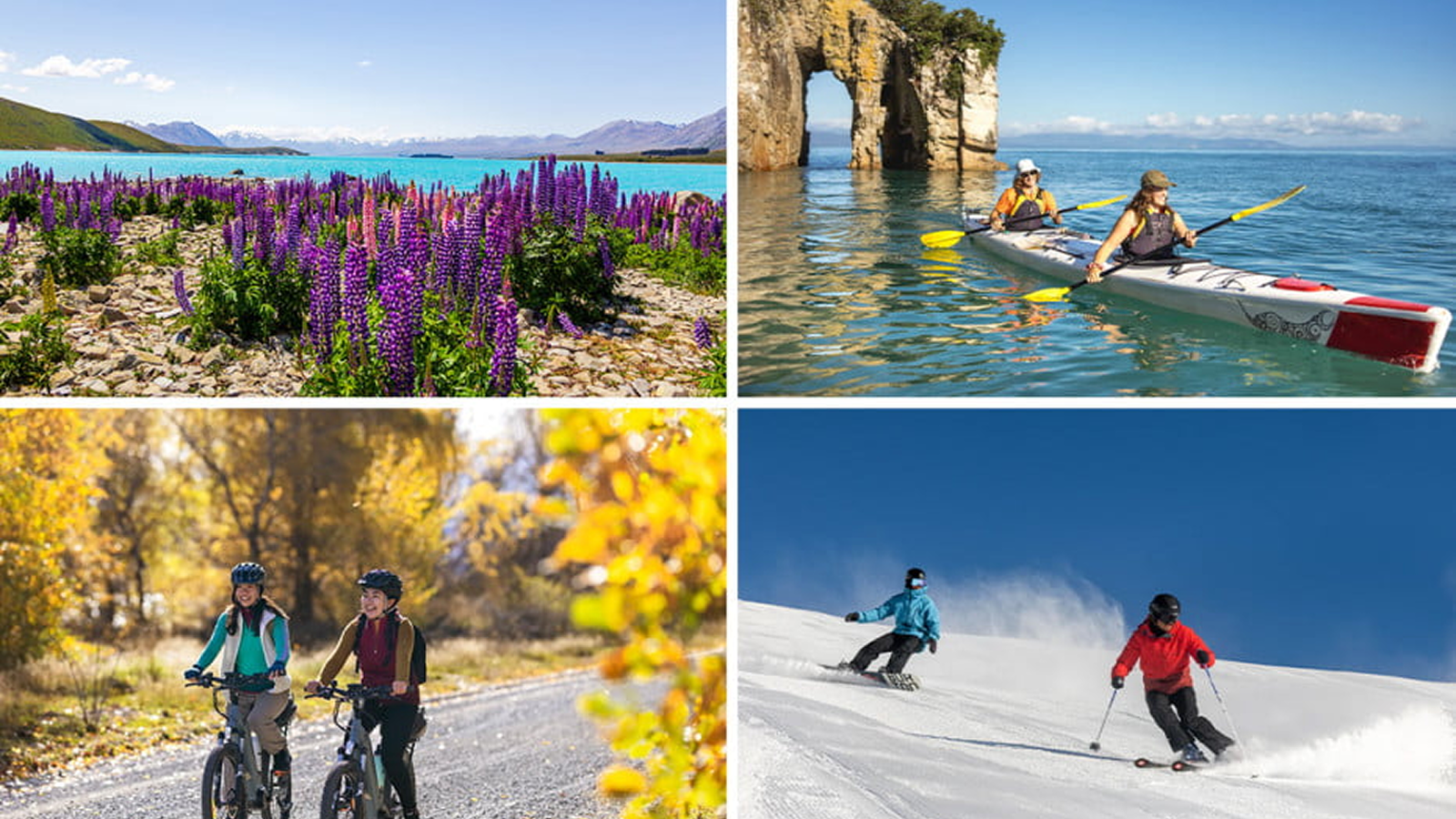
- South Island: more seasonal extremes, with winter (June–August) bringing snow to the Southern Alps (ideal for skiing) and summer (December–February) being the main window for the best hiking and Great Walks conditions.
Month-by-Month Breakdown
January Peak summer, and the busiest month of the year — New Zealanders themselves are often on summer holiday, so accommodation and popular attractions can be crowded and pricier. Excellent hiking and beach weather on both islands.
February Still peak summer, slightly less crowded than January as local school holidays wind down, generally the driest and warmest month for South Island hiking.
March Early autumn — one of the better months overall, with generally settled weather, thinning crowds, and the start of noticeably lower prices compared to peak summer.
April Autumn colors, especially in areas like Central Otago and Hawke’s Bay wine country, with mild weather and continued lower prices — a strong shoulder-season pick.
May Later autumn, cooler but still generally pleasant, especially on the North Island. South Island alpine areas start seeing early snow.
June Start of winter — ski season begins in earnest in Queenstown and Wanaka. North Island travel remains pleasant with fewer crowds than summer.
July Peak ski season in the South Island’s Southern Alps resorts. North Island sees its wettest, coolest stretch, though city travel (Auckland, Wellington) remains reasonable.
August Similar to July — good for skiing, quieter for general sightseeing, with lower accommodation prices outside the ski towns themselves.
September Early spring — a good transitional month with fewer crowds and improving weather, though some Great Walks and higher-altitude trails may still have residual snow.
October Spring is well underway, with generally good weather returning and prices still lower than peak summer — a strong shoulder-season choice, especially for North Island travel.
November Late spring, warming toward summer, with most Great Walks trails becoming more reliably accessible and crowds still noticeably lower than the December peak.
December The start of peak summer season, prices rising, though the first half of the month is generally less crowded than the school-holiday rush closer to Christmas.
By Priority
Best weather (South Island hiking/Great Walks): December–February Best value: March–May, September–November Ski season: June–September (South Island) Fewest crowds: March–May, September–October
A Few Practical Notes
- Great Walks huts and campsites require advance booking, especially for the December–February season — some sell out months ahead.
- Rental car prices rise significantly in peak summer — booking well ahead or traveling in shoulder season can meaningfully reduce this cost.
- Distances between sights are often longer than they look on a map, particularly on the South Island — build in more driving time than you’d expect, regardless of season.
The Bottom Line
If your dates are flexible, aim for March–May or September–November — you get generally good weather on both islands without the December–February crowds and prices. If South Island hiking on the Great Walks is the priority, December–February remains the most reliable window despite the crowds; if skiing is the goal, June–September is non-negotiable.