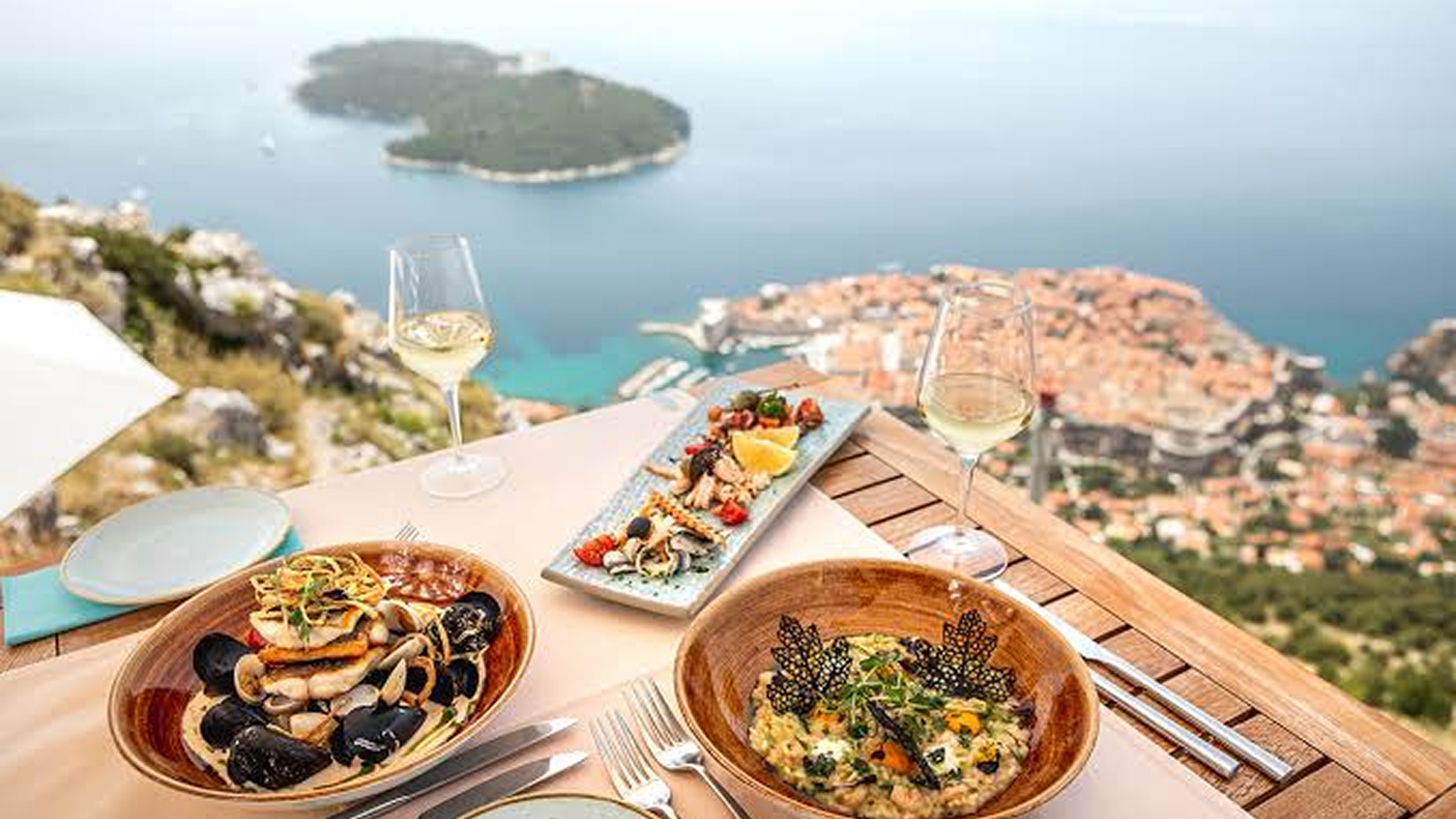
Croatia is increasingly interesting as a destination for food-focused travel.
Its cuisine reflects the country’s geography and history. Along the Adriatic coast, seafood, olive oil, herbs and Mediterranean cooking traditions dominate. Inland regions have stronger Central European influences, while Istria is particularly known for truffles, pasta, olive oil and wine.
Food in Croatia also changes from one region to another.
A plate of grilled fish in Dalmatia can feel completely different from a bowl of štrukli in Zagreb or truffle pasta in Istria. The country’s islands add another layer, with local seafood, lamb, cheese and traditional preparations shaped by centuries of island life.
Wine is another important part of the experience. Croatia has several distinctive wine regions, including Istria, Dalmatia and the Pelješac Peninsula.
For travelers, this means a Croatian food trip can be much more than restaurant hopping.
You can explore local markets, family-run konobas, vineyards, olive groves, fishing towns, food festivals and regional producers while discovering the country’s landscapes at the same time.
This guide explores 25 of the best food destinations in Croatia for 2026, including cities, islands, coastal towns and inland culinary destinations.
Croatia Food at a Glance
| Destination | Known For | Best Food Experience |
|---|---|---|
| Zagreb | Štrukli, traditional cuisine | Markets & restaurants |
| Rovinj | Seafood, Istrian cuisine | Seafood & fine dining |
| Poreč | Olive oil, seafood | Istrian food |
| Motovun | Truffles | Truffle dishes |
| Buzet | Truffles, traditional cuisine | Local specialties |
| Grožnjan | Istrian cuisine, wine | Small-town dining |
| Opatija | Seafood, fine dining | Coastal restaurants |
| Rijeka | Seafood, regional cuisine | Markets & restaurants |
| Zadar | Seafood, Pag cheese | Dalmatian cuisine |
| Šibenik | Seafood, local wine | Traditional restaurants |
| Split | Seafood, pašticada | Konobas |
| Trogir | Fish & seafood | Waterfront dining |
| Hvar | Seafood, wine | Island cuisine |
| Korčula | Seafood, wine | Local taverns |
| Vis | Seafood, traditional dishes | Island food |
| Dubrovnik | Seafood, black risotto | Dalmatian cuisine |
| Ston | Oysters, shellfish | Oyster tasting |
| Pelješac | Wine, seafood | Winery visits |
| Pag | Paški sir | Cheese tasting |
| Mali Lošinj | Seafood | Island dining |
| Cres | Lamb, cheese, seafood | Local cuisine |
| Brač | Lamb, olive oil | Island specialties |
| Lastovo | Seafood | Traditional island food |
| Varaždin | Central European cuisine | Traditional dishes |
| Osijek | Slavonian cuisine | Meat & river fish |
What Makes Croatian Cuisine Unique?
Croatian cuisine is difficult to define with one single style.
The country sits at the meeting point of several culinary traditions, and its food changes substantially between regions.
Adriatic Croatia
The coastal cuisine focuses heavily on:
- Fresh fish
- Shellfish
- Octopus
- Olive oil
- Garlic
- Herbs
- Seasonal vegetables
Simple preparation is often central to the cuisine.
Istria
Istrian cuisine has strong Italian and Mediterranean influences.
The region is particularly associated with:
- Truffles
- Olive oil
- Pasta
- Fuži
- Boškarin beef
- Istrian wines
- Seafood
Dalmatia
Dalmatian cooking is strongly connected to the Adriatic.
Typical ingredients include:
- Fish
- Octopus
- Squid
- Olive oil
- Garlic
- Tomatoes
- Herbs
Traditional dishes such as pašticada and black risotto are also associated with the region.
Inland Croatia
Northern and eastern Croatia have stronger Central European influences.
You’ll find dishes based around:
- Meat
- Dumplings
- Stews
- Cheese
- Pastries
- River fish
- Seasonal vegetables
25 Best Food Destinations in Croatia
1. Zagreb
Region: Central Croatia
Zagreb is one of the best places to understand Croatia’s inland food culture.
The city’s food scene ranges from traditional restaurants and bakeries to modern restaurants and food markets.
One dish to look for is štrukli, a traditional pastry-like dish associated particularly with northern Croatia.
The Dolac Market is also an important stop for understanding local produce and everyday Croatian food culture.
Try:
- Štrukli
- Fresh market produce
- Traditional soups
- Croatian pastries
- Local meats
Best for:
Traditional Croatian food and markets
2. Rovinj
Region: Istria
Rovinj combines Adriatic seafood with Istrian culinary traditions.
Its location on the western Istrian coast means seafood is a major part of the local dining scene.
Restaurants around the historic town serve dishes based on seasonal fish, shellfish, olive oil and local ingredients.
Try:
- Fresh Adriatic fish
- Scampi
- Istrian pasta
- Local olive oil
- Istrian wines
Best for:
Seafood and upscale dining
3. Poreč
Region: Istria
Poreč is another excellent base for exploring Istrian cuisine.
The surrounding countryside is particularly important to the region’s food culture, with olive groves, vineyards and producers supplying local restaurants.
Try:
- Istrian olive oil
- Fuži pasta
- Seafood
- Local wines
- Seasonal vegetables
Best for:
Istrian food and wine
4. Motovun
Region: Istria
Motovun is one of Istria’s most recognizable hilltop towns and an important destination for truffle-focused food travel.
The surrounding forests are associated with both white and black truffles.
Many restaurants use truffles with pasta, eggs, meat and other local ingredients.
Try:
- Fresh truffles
- Truffle pasta
- Fuži
- Istrian cheese
- Local wine
Best for:
Truffles
5. Buzet
Region: Istria
Buzet is another important destination for exploring Istrian truffle culture.
The town is located in the northern part of the peninsula and is surrounded by countryside associated with truffle hunting.
Its food traditions also include hearty local dishes influenced by the region’s inland geography.
Try:
- Truffle dishes
- Fuži
- Local cheeses
- Istrian wine
Best for:
Truffle experiences and traditional cuisine
6. Grožnjan
Region: Istria
Grožnjan is a small hilltop town known for its artistic atmosphere and historic stone streets.
Its location also makes it a useful stop on an Istrian food and wine itinerary.
Small restaurants and local producers offer opportunities to sample regional ingredients.
Try:
- Istrian pasta
- Truffles
- Olive oil
- Local wine
- Seasonal dishes
Best for:
Small-town culinary experiences
7. Opatija
Region: Kvarner
Opatija has a long history as a coastal resort and has developed a sophisticated restaurant scene.
Its location on Kvarner Bay provides access to Adriatic seafood while the surrounding region contributes ingredients such as local olive oil and vegetables.
Try:
- Fresh fish
- Scampi
- Shellfish
- Local desserts
- Kvarner wines
Best for:
Coastal dining and refined restaurants
8. Rijeka
Region: Kvarner
Rijeka provides a more urban interpretation of Kvarner cuisine.
Its market and restaurants make it a useful destination for travelers interested in understanding the region’s relationship with the Adriatic.
Try:
- Seafood
- Local pasta
- Fish dishes
- Seasonal produce
- Kvarner specialties
Best for:
Markets and urban food experiences
9. Zadar
Region: Dalmatia
Zadar is an excellent introduction to Dalmatian cuisine.
The city combines traditional restaurants with a growing contemporary food scene.
Fresh fish, shellfish and olive oil are central to many local dishes.
Try:
- Grilled fish
- Octopus
- Squid
- Pašticada
- Pag cheese
Best for:
Dalmatian seafood
10. Šibenik
Region: Dalmatia
Šibenik has become an increasingly interesting destination for food travelers.
The surrounding region produces wine, olive oil, seafood and agricultural products.
The city’s historic center provides an attractive setting for exploring local restaurants.
Try:
- Adriatic seafood
- Local wines
- Olive oil
- Traditional Dalmatian dishes
Best for:
Modern Dalmatian cuisine
11. Split
Region: Dalmatia
Split is one of Croatia’s most important food destinations.
The city’s location directly on the Adriatic means seafood is naturally central, while its historic restaurants offer traditional Dalmatian dishes.
One classic dish to look for is pašticada, a slow-cooked beef dish traditionally served with gnocchi.
Try:
- Pašticada
- Black risotto
- Grilled fish
- Octopus
- Dalmatian prosciutto
Best for:
Traditional Dalmatian food
12. Trogir
Region: Dalmatia
Trogir’s compact historic center provides an atmospheric setting for coastal dining.
Its restaurants make use of the seafood available along the central Dalmatian coast.
Try:
- Grilled fish
- Squid
- Octopus
- Shellfish
- Local wine
Best for:
Historic-town dining
13. Hvar
Region: Dalmatia
Hvar is famous for its beaches and nightlife, but the island also has a distinctive food culture.
The local cuisine combines seafood with island-grown ingredients.
Lavender is another well-known part of Hvar’s agricultural identity.
Try:
- Fresh fish
- Octopus
- Local olive oil
- Island wines
- Traditional stews
Best for:
Island cuisine and wine
14. Korčula
Region: Dalmatia
Korčula has a strong maritime tradition, and seafood remains central to the local cuisine.
The island also produces wine, with Pošip among the varieties associated with the wider region.
Try:
- Fresh fish
- Shellfish
- Žrnovski makaruni
- Local white wine
- Olive oil
Best for:
Seafood and island wine
15. Vis
Region: Dalmatia
Vis is one of the Croatian islands where traditional food culture remains particularly important.
Its relatively isolated history helped preserve distinctive local dishes.
The island is known for seafood and traditional preparations.
Try:
- Fresh fish
- Octopus
- Peka
- Local wine
- Seafood stews
Best for:
Traditional island cuisine
16. Dubrovnik
Region: Southern Dalmatia
Dubrovnik is one of Croatia’s most visited destinations, and its food scene reflects the city’s location at the southern end of the Adriatic.
Seafood dominates many menus.
One classic dish to look for is crni rižot, or black risotto, traditionally prepared with cuttlefish or squid ink.
Try:
- Black risotto
- Grilled fish
- Oysters
- Octopus
- Dalmatian prosciutto
Best for:
Seafood and traditional Dalmatian dishes
17. Ston
Region: Pelješac Peninsula
Ston is one of Croatia’s most important destinations for oyster lovers.
The nearby Mali Ston Bay is famous for its shellfish production.
Oysters are best experienced simply, allowing the flavor of the Adriatic waters to remain central.
Try:
- Fresh oysters
- Mussels
- Shellfish
- Local seafood
- Pelješac wine
Best for:
Oysters and shellfish
18. Pelješac Peninsula
Region: Southern Dalmatia
Pelješac is particularly important for Croatian wine.
The peninsula is home to vineyards producing Plavac Mali, one of Croatia’s best-known red grape varieties.
Food and wine work naturally together here, with seafood and regional meat dishes appearing alongside local wines.
Try:
- Plavac Mali
- Oysters
- Fresh seafood
- Local cheeses
- Dalmatian meat dishes
Best for:
Wine and seafood
19. Pag
Region: Northern Dalmatia
Pag is best known for Paški sir, or Pag cheese.
The island’s distinctive landscape and grazing conditions contribute to the character of its sheep’s milk cheese.
Food travelers can combine cheese tasting with seafood and island cuisine.
Try:
- Paški sir
- Lamb
- Seafood
- Local olive oil
- Island wine
Best for:
Cheese and lamb
20. Mali Lošinj
Region: Kvarner
Mali Lošinj is a scenic island destination where seafood is naturally central to the local cuisine.
The island’s restaurants combine traditional Adriatic cooking with contemporary approaches.
Try:
- Fresh fish
- Scampi
- Octopus
- Local olive oil
- Island specialties
Best for:
Island seafood
21. Cres
Region: Kvarner
Cres has a strong tradition of sheep farming and island agriculture.
The island is particularly associated with Cres lamb, while seafood remains important along the coast.
Try:
- Cres lamb
- Local cheese
- Fresh fish
- Olive oil
- Traditional island dishes
Best for:
Lamb and traditional island cuisine
22. Brač
Region: Dalmatia
Brač is another Croatian island with a distinctive food identity.
The island is known for its lamb, olive oil and traditional dishes.
The combination of mountains, countryside and coastline provides plenty of regional ingredients.
Try:
- Brač lamb
- Olive oil
- Fresh seafood
- Local cheese
- Traditional stews
Best for:
Island food and olive oil
23. Lastovo
Region: Southern Dalmatia
Lastovo is one of Croatia’s more remote inhabited islands.
Its relative isolation has helped maintain traditional island food culture.
Seafood is central, while local gardens and agricultural products contribute seasonal ingredients.
Try:
- Fresh fish
- Lobster
- Octopus
- Local vegetables
- Island wine
Best for:
Traditional island food
24. Varaždin
Region: Northern Croatia
Varaždin offers a completely different culinary experience from the Adriatic coast.
The city’s cuisine reflects Central European influences and northern Croatian traditions.
Try:
- Štrukli
- Meat dishes
- Dumplings
- Traditional pastries
- Local wines
Best for:
Northern Croatian cuisine
25. Osijek
Region: Slavonia
Osijek is an excellent destination for travelers interested in eastern Croatian cuisine.
Slavonian cooking is known for hearty dishes, paprika, meats and freshwater fish.
The region also has a strong wine tradition.
Try:
- Fiš paprikaš
- Kulen
- River fish
- Paprika-based dishes
- Slavonian wines
Best for:
Traditional Slavonian cuisine
Best Croatian Food Destinations by Region
Istria
For truffles, olive oil and wine:
- Rovinj
- Poreč
- Motovun
- Buzet
- Grožnjan
Istria is one of the strongest regions for a dedicated food and wine road trip.
Kvarner
For seafood and island cuisine:
- Opatija
- Rijeka
- Cres
- Lošinj
Northern Dalmatia
For seafood, cheese and traditional dishes:
- Zadar
- Pag
- Šibenik
Central Dalmatia
For island cuisine and seafood:
- Split
- Trogir
- Hvar
- Brač
- Vis
Southern Dalmatia
For oysters, wine and seafood:
- Dubrovnik
- Ston
- Pelješac
- Korčula
- Lastovo
Inland Croatia
For traditional Central European-influenced cuisine:
- Zagreb
- Varaždin
- Osijek
Best Places for Seafood in Croatia
Croatia’s long Adriatic coastline makes seafood one of the country’s defining culinary experiences.
Some destinations to consider include:
Dubrovnik
Excellent for traditional Dalmatian seafood.
Split
A strong choice for combining seafood with classic Croatian dishes.
Rovinj
Combines Istrian ingredients with Adriatic seafood.
Ston
Particularly known for oysters.
Zadar
A good base for exploring northern Dalmatian seafood.
Vis
Ideal for traditional island cuisine.
Best Places for Truffles
If truffles are your main reason for visiting Croatia, focus on Istria.
Motovun
One of the best-known destinations for truffle-focused travel.
Buzet
An important center for Istrian truffle culture.
Grožnjan
A scenic base for exploring Istrian food and wine.
Look for truffles served with:
- Fuži
- Eggs
- Steak
- Cheese
- Seasonal vegetables
Best Places for Croatian Wine
Croatia has several important wine regions.
Istria
Look for:
Malvazija Istarska
This white wine is strongly associated with Istria.
Pelješac
Look for:
Plavac Mali
The peninsula is particularly associated with red wines made from this grape.
Korčula
Look for:
Pošip
The island and wider Dalmatian region are closely associated with this white grape.
Inland Croatia
Northern regions offer different wine styles and provide another perspective on Croatian wine culture.
Best Places for Traditional Croatian Food
For travelers interested in traditional dishes rather than modern restaurants, consider:
Zagreb
For štrukli and northern Croatian cuisine.
Split
For classic Dalmatian dishes.
Osijek
For Slavonian food and river fish.
Varaždin
For Central European-influenced northern cuisine.
Vis
For traditional island dishes.
Pag
For cheese and lamb.
Food Markets to Visit in Croatia
Markets are an excellent way to understand local food culture.
Dolac Market — Zagreb
One of Zagreb’s best-known food markets.
Look for:
- Fruit
- Vegetables
- Cheese
- Meat
- Local products
Pazar Market — Split
Located near the historic center, this market is useful for exploring fresh produce and local ingredients.
Rijeka Market
A major destination for seafood and fresh regional produce.
Zadar Market
A convenient stop for exploring Dalmatian ingredients and local products.
Croatian Dishes You Should Try
Štrukli
A traditional northern Croatian dish made from pastry and cheese, with versions that can be prepared in different ways.
Pašticada
A slow-cooked beef dish strongly associated with Dalmatian cuisine.
It is commonly served with gnocchi.
Crni Rižot
Black risotto made using cuttlefish or squid and its ink.
It is particularly associated with the Adriatic coast.
Peka
A traditional slow-cooking method where meat, seafood or vegetables are cooked beneath a bell-shaped lid.
Fuži
A type of Istrian pasta often served with sauces based on truffles, meat or other local ingredients.
Paški Sir
A sheep’s milk cheese from Pag.
It is one of Croatia’s most recognizable regional cheeses.
Kulen
A traditional Slavonian cured sausage seasoned with paprika and spices.
Fiš Paprikaš
A spicy freshwater fish stew associated with eastern Croatia.
Best Time for a Croatian Food Trip
Spring
Spring is good for combining food with sightseeing and countryside exploration.
Summer
Summer is ideal for seafood, island dining and coastal restaurants.
However, popular destinations can be busy.
Autumn
Autumn is particularly attractive for wine-focused travel and seasonal food.
Istria and inland wine regions can be excellent additions to an autumn itinerary.
Winter
Winter works best for city-based food travel.
Zagreb and other inland destinations offer more year-round options than small coastal resorts.
Suggested Croatia Food Itineraries
5-Day Istrian Food Trip
Day 1: Rovinj
Day 2: Poreč
Day 3: Motovun
Day 4: Buzet & Grožnjan
Day 5: Return through Istrian wine country
Focus on:
- Truffles
- Olive oil
- Wine
- Pasta
- Seafood
7-Day Dalmatian Food Trip
Day 1: Split
Day 2: Trogir
Day 3: Šibenik
Day 4: Zadar
Day 5: Hvar
Day 6: Vis
Day 7: Split
Focus on:
- Seafood
- Island cuisine
- Olive oil
- Wine
- Traditional Dalmatian dishes
7-Day Southern Croatia Food Trip
Day 1: Dubrovnik
Day 2: Ston
Day 3: Pelješac
Day 4: Korčula
Day 5: Korčula
Day 6: Dubrovnik
Day 7: Dubrovnik
Focus on:
- Oysters
- Seafood
- Plavac Mali
- Island cuisine
- Local olive oil
Croatia Food Travel Tips
Eat Local
Look for konobas, traditional Croatian-style restaurants and taverns, particularly outside the largest tourist centers.
Ask About Seasonal Specialties
Menus can change depending on the fishing season and local agricultural production.
Try Regional Wines
Don’t limit yourself to internationally familiar wine labels.
Ask for wines from the region you’re visiting.
Visit a Market
Markets provide a useful introduction to local ingredients before you sit down for a meal.
Don’t Order Only Seafood
Croatia’s inland cuisine is just as interesting.
Try regional meat, cheese, pasta and traditional dishes when traveling away from the coast.
Explore Beyond Dubrovnik and Split
The country’s strongest culinary experiences are spread across different regions.
Istria, Pelješac, Pag, Slavonia and the islands all have distinctive food cultures.
FAQs
What food is Croatia famous for?
Croatia is known for Adriatic seafood, Istrian truffles, olive oil, regional cheeses, Dalmatian dishes, cured meats and a growing wine culture.
What is the most famous Croatian dish?
There isn’t one single national dish that represents all of Croatia. Pašticada, black risotto, peka, štrukli and regional seafood dishes are among the foods travelers commonly encounter.
Where is the best food in Croatia?
Food traditions vary by region. Istria is particularly notable for truffles and wine, Dalmatia for seafood, Pag for cheese and Slavonia for hearty inland cuisine.
Where can I eat the best seafood in Croatia?
Dubrovnik, Split, Rovinj, Zadar, Ston and the islands all offer strong seafood traditions.
Where can I try Croatian truffles?
Istria is the main destination to consider, particularly around Motovun and Buzet.
What wine should I try in Croatia?
Consider Malvazija Istarska in Istria, Plavac Mali on the Pelješac Peninsula and Pošip in Dalmatia.
Is Croatian food spicy?
Traditional Croatian cuisine is generally not defined by strong heat. Some regional dishes, particularly in Slavonia, use paprika and spices more prominently.
Is Croatian food vegetarian-friendly?
Yes, although coastal menus often emphasize fish and meat. Istrian cuisine also includes pasta, vegetables, mushrooms, truffles and olive oil-based dishes.
What is a konoba?
A konoba is a traditional-style Croatian tavern or restaurant, particularly associated with coastal and island regions.
What is the best Croatian island for food?
There is no single answer because each island has different specialties. Pag is particularly notable for cheese, while Hvar, Vis, Korčula and Brač each offer distinctive island cuisines.
Conclusion
Croatia’s food culture is as diverse as its coastline, islands and inland landscapes.
In Istria, food travelers can explore truffles, olive oil, pasta and wine. Along the Dalmatian coast, seafood, grilled fish, octopus and traditional dishes dominate. Islands such as Pag, Vis, Hvar, Brač and Korčula add their own specialties, while Slavonia and northern Croatia provide a very different culinary experience.
For seafood, look toward the Adriatic.
For truffles, explore Istria.
For oysters and wine, head toward Ston and the Pelješac Peninsula.
For cheese, visit Pag.
For traditional northern cuisine, explore Zagreb and Varaždin.
And for hearty eastern Croatian dishes, consider Osijek and Slavonia.
The best Croatian food trip is therefore not about finding one restaurant or one dish. It is about following the country’s regions and discovering how geography, history and local ingredients shape what appears on the plate.