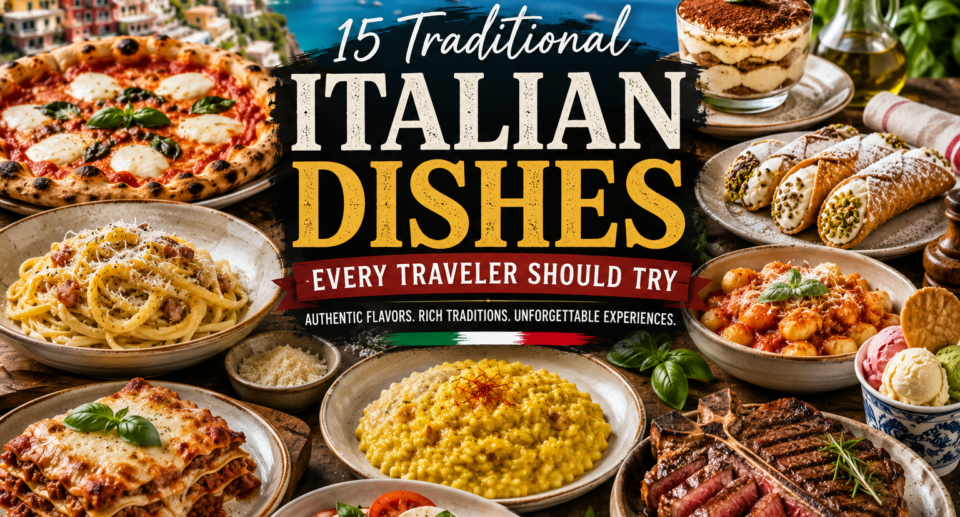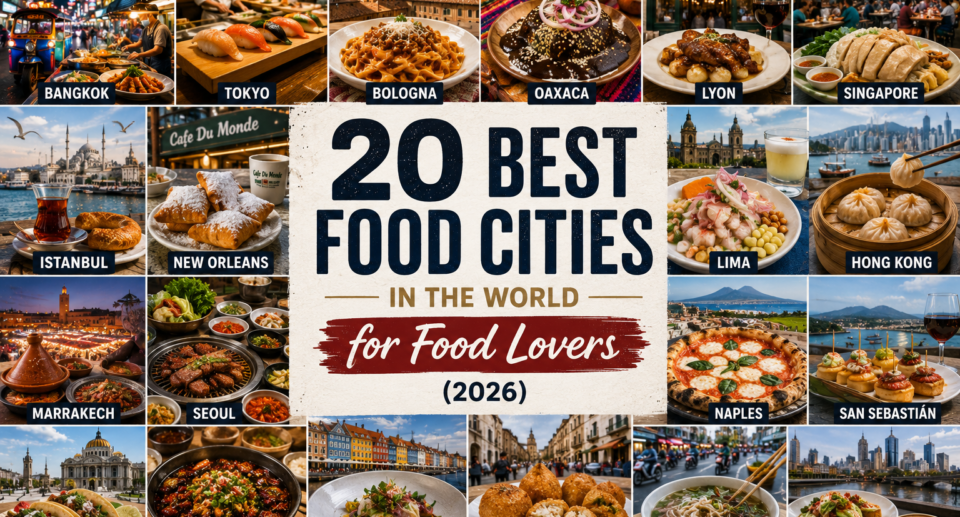
Italy is one of the world’s great food destinations, but Italian cuisine is not a single style.
Every region has its own ingredients, recipes and traditions. Bologna is famous for rich Emilia-Romagna cuisine, Naples is closely associated with pizza, Rome has its iconic pasta dishes, Sicily brings together Mediterranean and Arab-influenced flavors, while Puglia is known for simple dishes built around local produce, olive oil and fresh pasta.
For travelers, exploring Italy through food means visiting markets, family-run restaurants, bakeries, food producers, vineyards and historic towns.
This guide explores 25 of the best food destinations in Italy in 2026, covering major culinary cities, regional food capitals, wine destinations and smaller places worth adding to a food-focused itinerary.
Quick Comparison Table
| # | Food Destination | Region | Known For | Best Culinary Experience |
|---|---|---|---|---|
| 1 | Bologna | Emilia-Romagna | Fresh Pasta & Ragù | Traditional Cuisine |
| 2 | Rome | Lazio | Pasta & Roman Cuisine | Food Tours |
| 3 | Naples | Campania | Pizza | Pizzerias |
| 4 | Florence | Tuscany | Tuscan Cuisine | Markets & Restaurants |
| 5 | Palermo | Sicily | Street Food | Food Markets |
| 6 | Milan | Lombardy | Risotto & Modern Cuisine | Fine Dining |
| 7 | Turin | Piedmont | Chocolate & Aperitivo | Cafés & Markets |
| 8 | Modena | Emilia-Romagna | Balsamic Vinegar | Food Producers |
| 9 | Parma | Emilia-Romagna | Parmigiano & Prosciutto | Food Tours |
| 10 | Genoa | Liguria | Pesto | Regional Cuisine |
| 11 | Venice | Veneto | Seafood & Cicchetti | Bacari |
| 12 | Verona | Veneto | Regional Cuisine & Wine | Food & Wine |
| 13 | Catania | Sicily | Street Food & Seafood | Markets |
| 14 | Syracuse | Sicily | Sicilian Cuisine | Markets & Restaurants |
| 15 | Bari | Puglia | Orecchiette & Seafood | Old Town Food |
| 16 | Lecce | Puglia | Salento Cuisine | Local Restaurants |
| 17 | Matera | Basilicata | Southern Cuisine | Historic Dining |
| 18 | Siena | Tuscany | Tuscan Specialties | Local Food |
| 19 | Lucca | Tuscany | Tuscan Cuisine | Markets |
| 20 | Parma Food Valley | Emilia-Romagna | Cheese & Cured Meats | Food Producers |
| 21 | Alba | Piedmont | Truffles & Wine | Food & Wine |
| 22 | Taormina | Sicily | Seafood & Sicilian Cuisine | Scenic Dining |
| 23 | Cagliari | Sardinia | Sardinian Cuisine | Markets |
| 24 | Perugia | Umbria | Truffles & Chocolate | Regional Food |
| 25 | Amalfi Coast | Campania | Seafood & Lemons | Coastal Cuisine |
How We Selected These Food Destinations
Italy’s food culture is deeply regional, so this list focuses on places where travelers can experience distinctive local cuisine.
We considered:
- Regional specialties
- Traditional restaurants
- Local markets
- Street food
- Pasta traditions
- Cheese and cured meats
- Wine regions
- Seafood
- Local producers
- Food festivals and markets
- Historic culinary traditions
- Food experiences suitable for travelers
The goal is to help you experience regional Italian food, rather than simply finding Italian restaurants.
1. Bologna
Bologna is one of Italy’s most important destinations for traditional food.
Located in Emilia-Romagna, the city is surrounded by a region famous for fresh pasta, cured meats, cheese and rich sauces.
What to Eat in Bologna
- Tagliatelle al ragù
- Tortellini
- Lasagne
- Mortadella
- Crescentine
- Parmigiano Reggiano
Best Food Experiences
Explore the historic center and visit the Quadrilatero food district, where markets, specialty shops and traditional restaurants showcase local ingredients.
Best for: Fresh pasta, traditional cuisine and food markets.
2. Rome
Rome’s food culture is built around relatively simple ingredients transformed into intensely flavorful dishes.
The city’s classic pasta dishes are among the best-known examples of Roman cuisine.
What to Eat in Rome
- Cacio e pepe
- Carbonara
- Amatriciana
- Gricia
- Supplì
- Roman pizza
Best Food Experiences
Explore local markets, traditional trattorias and neighborhood bakeries.
For a more local experience, look beyond the most tourist-heavy streets and explore neighborhoods such as Testaccio and Trastevere.
Best for: Pasta, street food and traditional Italian cuisine.
3. Naples
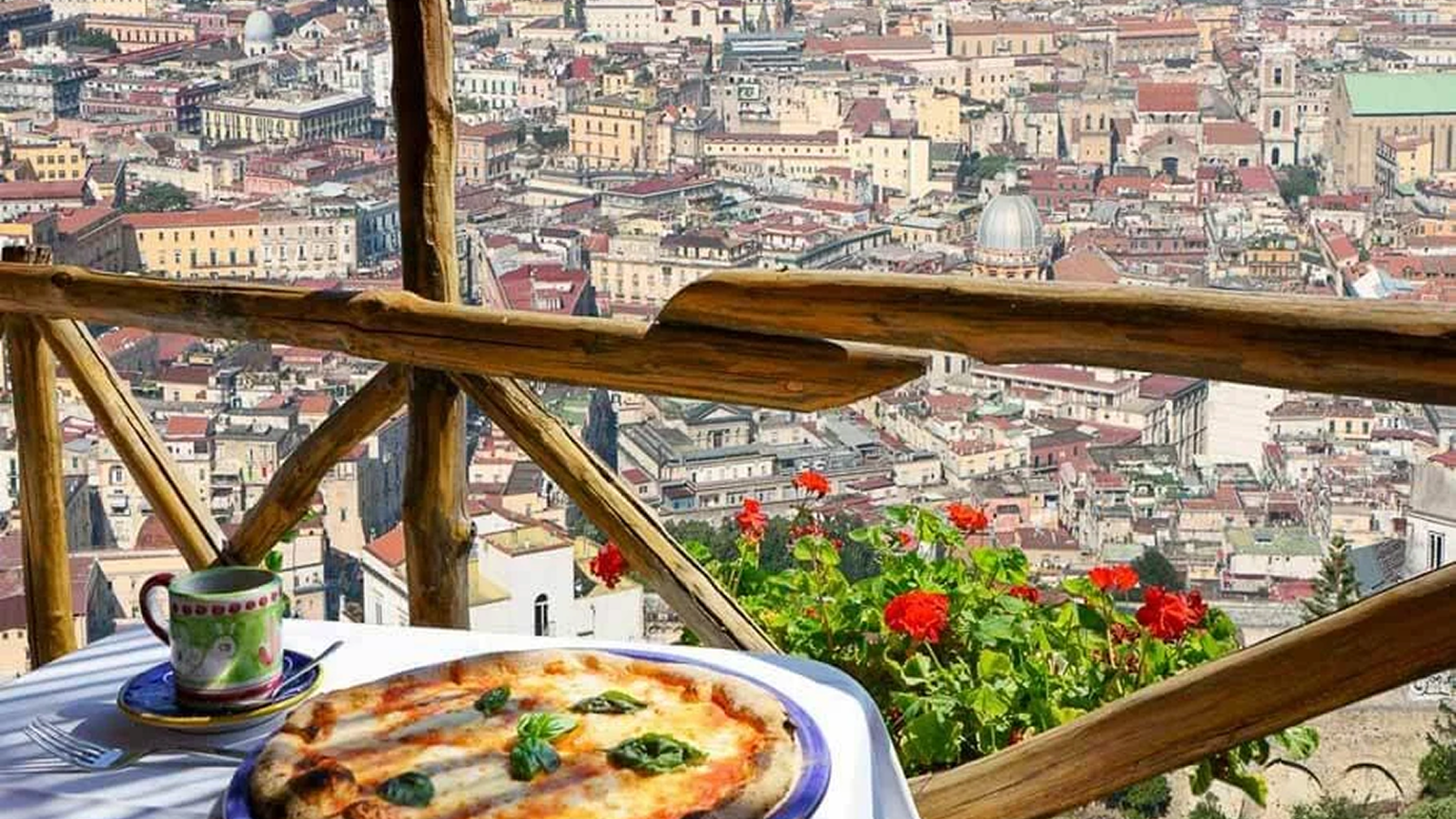
Naples is closely associated with one of Italy’s most famous foods: pizza.
Traditional Neapolitan pizza emphasizes a small number of high-quality ingredients, including tomatoes, mozzarella, basil and olive oil.
What to Eat in Naples
- Pizza Margherita
- Pizza marinara
- Cuoppo
- Sfogliatella
- Babà
- Pasta dishes
Best Food Experiences
Visit traditional pizzerias and explore the street-food culture of the historic center.
Naples is also an excellent starting point for exploring the food traditions of Campania.
Best for: Pizza, street food and casual dining.
4. Florence
Florence offers a distinctly Tuscan approach to food.
The cuisine traditionally emphasizes quality ingredients rather than complicated preparation.
What to Eat in Florence
- Bistecca alla fiorentina
- Ribollita
- Pappa al pomodoro
- Crostini
- Schiacciata
- Tuscan pecorino
Best Food Experiences
Visit local markets, traditional trattorias and food shops around the historic center.
Best for: Tuscan cuisine, markets and wine.
5. Palermo
Palermo is one of the most exciting food destinations in Sicily, particularly for travelers interested in street food.
Sicilian cuisine reflects centuries of Mediterranean cultural influences.
What to Eat in Palermo
- Arancine
- Panelle
- Sfincione
- Cannoli
- Pasta con le sarde
- Caponata
Best Food Experiences
Explore the city’s historic markets, including Ballarò, Vucciria and Capo, where street food is an important part of the local culture.
Best for: Street food, markets and Sicilian cuisine.
6. Milan
Milan’s food culture combines traditional Lombard dishes with a modern international dining scene.
The city is particularly known for rich northern Italian dishes.
What to Eat in Milan
- Risotto alla Milanese
- Cotoletta alla Milanese
- Ossobuco
- Panettone
- Polenta
- Local cheeses
Best Food Experiences
Explore traditional restaurants while also experiencing Milan’s contemporary food scene.
The city is particularly interesting for travelers who want to combine Italian traditions with modern dining.
Best for: Modern cuisine, traditional Lombard food and aperitivo.
7. Turin
Turin is an elegant destination for travelers interested in chocolate, coffee, aperitivo culture and Piedmontese cuisine.
The city also has strong connections with Italy’s food and beverage traditions.
What to Eat in Turin
- Gianduiotti
- Agnolotti
- Vitello tonnato
- Bagna càuda
- Tajarin
- Piedmontese hazelnuts
Best Food Experiences
Visit historic cafés, chocolate shops and traditional restaurants.
Turin is also a useful base for exploring the Piedmont wine region.
Best for: Chocolate, coffee, aperitivo and wine.
8. Modena
Modena is one of Italy’s most important destinations for food producers and traditional culinary products.
The city is particularly famous for traditional balsamic vinegar.
What to Eat in Modena
- Traditional balsamic vinegar
- Tortellini
- Tigelle
- Lambrusco
- Parmigiano Reggiano
- Cured meats
Best Food Experiences
Visit traditional balsamic vinegar producers and combine tastings with local restaurants.
Best for: Food producers, balsamic vinegar and Emilia-Romagna cuisine.
9. Parma
Parma is one of the world’s best-known destinations for Italian cheese and cured meat.
The surrounding area is closely associated with Parmigiano Reggiano and Prosciutto di Parma.
What to Eat in Parma
- Parmigiano Reggiano
- Prosciutto di Parma
- Culatello
- Tortelli
- Anolini
- Local wines
Best Food Experiences
Visit cheese dairies and cured-meat producers to understand how traditional products are made.
Best for: Cheese, charcuterie and food-focused trips.
10. Genoa
Genoa is the birthplace of one of Italy’s most famous sauces: pesto Genovese.
The city’s Ligurian cuisine also makes extensive use of seafood, herbs, vegetables and olive oil.
What to Eat in Genoa
- Pesto Genovese
- Trofie al pesto
- Focaccia
- Farinata
- Seafood
- Pansoti
Best Food Experiences
Explore the historic center, local food shops and traditional restaurants.
Best for: Pesto, Ligurian cuisine and seafood.
11. Venice
Venice offers a food culture closely connected to its lagoon and maritime history.
Traditional small plates known as cicchetti are a particularly enjoyable way to explore local flavors.
What to Eat in Venice
- Cicchetti
- Sarde in saor
- Bigoli
- Baccalà mantecato
- Risotto
- Fresh seafood
Best Food Experiences
Visit traditional bacari, the small wine bars where cicchetti are commonly served.
Best for: Seafood, cicchetti and food-focused city walks.
12. Verona
Verona is known primarily for its historic center and connection to Shakespeare’s Romeo and Juliet, but the city also has a strong regional food culture.
The surrounding Veneto countryside adds wine and agricultural traditions to the experience.
What to Eat in Verona
- Risotto all’Amarone
- Bigoli
- Pastissada de caval
- Local cheeses
- Pandoro
- Veneto wines
Best Food Experiences
Combine a visit to Verona with wine travel in the surrounding Veneto region.
Best for: Food and wine, historic city breaks and regional cuisine.
13. Catania
Catania offers an energetic introduction to eastern Sicilian food.
The city’s cuisine combines seafood, produce from volcanic soils and traditional Sicilian street food.
What to Eat in Catania
- Arancini
- Pasta alla Norma
- Cannoli
- Fresh seafood
- Granita
- Brioche
Best Food Experiences
Explore local markets and street-food stalls around the historic center.
Best for: Street food, seafood and Sicilian cuisine.
14. Syracuse
Syracuse combines ancient history with the culinary traditions of southeastern Sicily.
The island’s Mediterranean ingredients play an important role in local dishes.
What to Eat in Syracuse
- Fresh seafood
- Pasta dishes
- Sicilian pastries
- Granita
- Local citrus
- Almond-based sweets
Best Food Experiences
Explore Ortigia’s food shops, markets and restaurants.
Best for: Seafood, Mediterranean food and historic surroundings.
15. Bari
Bari is one of the best places to experience traditional Puglian cuisine.
The old town is particularly interesting for travelers who want to see local pasta traditions in action.
What to Eat in Bari
- Orecchiette
- Focaccia Barese
- Burrata
- Seafood
- Panzerotti
- Fava and vegetables
Best Food Experiences
Walk through Bari Vecchia and look for traditional pasta makers preparing orecchiette.
Best for: Pasta, street food and authentic regional cuisine.
16. Lecce
Lecce is known for its Baroque architecture and provides a gateway to the food culture of Salento.
The cuisine is strongly connected to simple ingredients, vegetables, wheat and olive oil.
What to Eat in Lecce
- Orecchiette
- Ciceri e tria
- Rustico leccese
- Focaccia
- Local cheeses
- Pasticiotti
Best Food Experiences
Explore traditional bakeries, cafés and restaurants in the historic center.
Best for: Southern Italian cuisine and pastry.
17. Matera
Matera’s ancient cave dwellings provide an extraordinary setting for experiencing southern Italian food.
The cuisine of Basilicata is generally rustic and ingredient-focused.
What to Eat in Matera
- Pane di Matera
- Orecchiette
- Peperoni cruschi
- Local cheeses
- Legume dishes
- Regional pasta
Best Food Experiences
Combine historic sightseeing with traditional restaurants overlooking the Sassi.
Best for: Historic settings, regional cuisine and southern Italy.
18. Siena
Siena is one of Tuscany’s most atmospheric cities and a good base for exploring Tuscan food traditions.
What to Eat in Siena
- Pici
- Ribollita
- Panzanella
- Pecorino
- Panforte
- Cinta Senese pork
Best Food Experiences
Explore traditional restaurants and food shops, then travel into the surrounding Tuscan countryside.
Best for: Tuscan cuisine, wine and countryside travel.
19. Lucca
Lucca combines Renaissance architecture with the culinary traditions of northern Tuscany.
The city’s compact historic center makes it particularly easy to explore on foot.
What to Eat in Lucca
- Tordelli lucchesi
- Buccellato
- Farro soup
- Tuscan meats
- Local cheeses
- Tuscan wine
Best Food Experiences
Explore local markets and traditional restaurants inside the historic walls.
Best for: Slow travel, Tuscan cuisine and food-focused city breaks.
20. Parma Food Valley
The wider Parma Food Valley deserves attention beyond the city itself.
This part of Emilia-Romagna is associated with some of Italy’s most important traditional food products.
What to Experience
- Parmigiano Reggiano
- Prosciutto di Parma
- Culatello
- Traditional pasta
- Local wineries
- Food producers
Best Food Experiences
A food-focused road trip through the surrounding countryside can include visits to producers and traditional restaurants.
Best for: Culinary tourism and food production.
21. Alba
Alba sits in Piedmont and is closely associated with wine, truffles and hazelnuts.
The surrounding Langhe landscape is particularly beautiful during autumn.
What to Eat in Alba
- White truffles
- Tajarin
- Hazelnuts
- Piedmontese cheeses
- Vitello tonnato
- Barolo and Barbaresco wines
Best Food Experiences
Explore the town’s food shops and combine the visit with trips into the Langhe vineyards.
Best for: Truffles, wine and gourmet travel.
22. Taormina
Taormina combines Sicilian food with dramatic coastal and mountain scenery.
The town’s elevated location provides views toward the Ionian Sea and Mount Etna.
What to Eat in Taormina
- Fresh seafood
- Pasta alla Norma
- Arancini
- Cannoli
- Granita
- Sicilian pastries
Best Food Experiences
Enjoy Sicilian cuisine on terraces overlooking the coastline and explore nearby food producers.
Best for: Scenic dining, couples and Sicilian cuisine.
23. Cagliari
Cagliari provides an introduction to the distinctive cuisine of Sardinia.
The island’s food traditions differ from mainland Italy and make extensive use of seafood, pasta, cheese and local meat.
What to Eat in Cagliari
- Fregola
- Culurgiones
- Pecorino Sardo
- Seafood
- Malloreddus
- Seadas
Best Food Experiences
Explore local markets and traditional restaurants before traveling into Sardinia’s countryside.
Best for: Island cuisine, seafood and regional food.
24. Perugia
Perugia is the capital of Umbria, a region known for truffles, olive oil, wine and hearty countryside cuisine.
What to Eat in Perugia
- Truffles
- Porchetta
- Umbrian cheeses
- Pasta
- Chocolate
- Local olive oil
Best Food Experiences
Visit local markets and explore Umbrian villages and producers outside the city.
Best for: Truffles, countryside food and chocolate.
25. Amalfi Coast
The Amalfi Coast is one of Italy’s most spectacular destinations for combining food and scenery.
Its cuisine is closely connected to the Mediterranean and the area’s famous lemons.
What to Eat
- Fresh seafood
- Lemon desserts
- Pasta
- Mozzarella
- Local vegetables
- Gelato
Best Food Experiences
Explore local restaurants in towns such as Amalfi, Positano and Ravello, and try regional dishes made with local ingredients.
Best for: Seafood, scenic dining and Mediterranean cuisine.
Quick Summary: Italy’s Best Food Destinations
| Destination | Signature Food | Best Experience |
|---|---|---|
| Bologna | Fresh pasta & ragù | Traditional trattorias |
| Rome | Carbonara & cacio e pepe | Food tours |
| Naples | Pizza | Traditional pizzerias |
| Florence | Bistecca & Tuscan food | Markets |
| Palermo | Street food | Food markets |
| Milan | Risotto & cotoletta | Modern dining |
| Turin | Chocolate & aperitivo | Historic cafés |
| Modena | Balsamic vinegar | Producer visits |
| Parma | Cheese & Prosciutto | Food tours |
| Genoa | Pesto & focaccia | Local restaurants |
| Venice | Cicchetti & seafood | Bacari |
| Verona | Amarone & regional food | Food + wine |
| Catania | Street food | Markets |
| Syracuse | Seafood | Ortigia restaurants |
| Bari | Orecchiette | Old Town |
| Lecce | Salento cuisine | Bakeries |
| Matera | Basilicata cuisine | Historic dining |
| Siena | Tuscan cuisine | Food + wine |
| Lucca | Tuscan specialties | Local markets |
| Parma Food Valley | Cheese & cured meats | Food producers |
| Alba | Truffles & wine | Langhe tours |
| Taormina | Seafood | Scenic dining |
| Cagliari | Sardinian cuisine | Markets |
| Perugia | Truffles & chocolate | Regional food |
| Amalfi Coast | Seafood & lemons | Coastal dining |
Best Food Destinations in Italy by Culinary Style
🍝 Best for Pasta
Consider:
- Bologna
- Rome
- Bari
- Florence
- Siena
- Genoa
Each region has its own pasta shapes, sauces and traditions.
🍕 Best for Pizza
Naples is the essential destination for travelers interested in traditional Neapolitan pizza.
You can also find excellent pizza throughout Italy, but Naples provides the strongest connection between the dish and its local culinary tradition.
🧀 Best for Cheese & Cured Meats
Consider:
- Parma
- Bologna
- Modena
- Parma Food Valley
- Turin
Emilia-Romagna is particularly important for travelers interested in traditional Italian cheese and cured meats.
🍷 Best for Wine & Food
Consider:
- Alba
- Florence
- Siena
- Verona
- Modena
- Amalfi Coast
For dedicated wine travel, Piedmont, Tuscany, Veneto and Emilia-Romagna provide particularly diverse experiences.
🦐 Best for Seafood
Consider:
- Naples
- Genoa
- Venice
- Syracuse
- Cagliari
- Amalfi Coast
- Taormina
🍫 Best for Chocolate
Consider:
- Turin
- Perugia
Both cities have strong associations with Italian chocolate traditions.
🌿 Best for Mediterranean Cuisine
Consider:
- Palermo
- Catania
- Syracuse
- Bari
- Amalfi Coast
- Taormina
Italian Regional Food You Should Try
Emilia-Romagna
Try:
- Tagliatelle al ragù
- Tortellini
- Mortadella
- Parmigiano Reggiano
- Prosciutto di Parma
- Traditional balsamic vinegar
Best destinations: Bologna, Modena and Parma.
Lazio
Try:
- Carbonara
- Cacio e pepe
- Amatriciana
- Gricia
- Supplì
Best destination: Rome.
Campania
Try:
- Neapolitan pizza
- Mozzarella
- Seafood
- Pasta
- Lemon desserts
Best destinations: Naples and Amalfi Coast.
Tuscany
Try:
- Bistecca alla fiorentina
- Pici
- Ribollita
- Pappa al pomodoro
- Pecorino
- Tuscan wines
Best destinations: Florence, Siena and Lucca.
Sicily
Try:
- Arancine
- Pasta alla Norma
- Cannoli
- Caponata
- Panelle
- Granita
Best destinations: Palermo, Catania, Syracuse and Taormina.
Puglia
Try:
- Orecchiette
- Focaccia Barese
- Burrata
- Panzerotti
- Seafood
- Olive oil
Best destinations: Bari and Lecce.
Piedmont
Try:
- White truffles
- Tajarin
- Agnolotti
- Gianduia
- Bagna càuda
- Piedmontese wines
Best destinations: Turin and Alba.
Sardinia
Try:
- Fregola
- Culurgiones
- Malloreddus
- Pecorino Sardo
- Seadas
- Seafood
Best destination: Cagliari and the surrounding island.
Best Time for Food Travel in Italy
Italy can be explored through food throughout the year, but different seasons offer different culinary experiences.
Spring — March to May
Spring is a good period for:
- Local markets
- Fresh vegetables
- Outdoor dining
- City breaks
- Countryside travel
Good destinations: Rome, Bologna, Florence, Puglia and Tuscany.
Summer — June to August
Summer is particularly suited to:
- Seafood
- Mediterranean cuisine
- Gelato
- Outdoor restaurants
- Coastal travel
Good destinations: Amalfi Coast, Sicily, Sardinia, Puglia and Liguria.
Popular destinations can become very busy during July and August.
Autumn — September to November
Autumn is particularly interesting for food travelers.
The season brings:
- Truffles
- Grapes and wine
- Mushrooms
- Chestnuts
- Seasonal produce
- Harvest-related experiences
Good destinations: Alba, Tuscany, Piedmont, Umbria and Emilia-Romagna.
Winter — December to February
Winter is a good season for hearty regional cuisine and city food experiences.
Try:
- Risotto
- Pasta
- Truffles
- Cheese
- Hot chocolate
- Traditional desserts
Good destinations: Turin, Milan, Bologna, Rome and Perugia.
Italian Food Travel Tips
1. Eat Regionally
Don’t expect the same dishes everywhere.
Italian cuisine changes dramatically from north to south.
2. Visit Local Markets
Markets are a great way to see seasonal produce, cheese, meat, seafood and local specialties.
3. Try the Local Pasta
Every region has different shapes and preparations.
4. Don’t Skip Street Food
Palermo, Naples, Bari and Catania are particularly interesting for street food.
5. Visit Food Producers
In regions such as Emilia-Romagna and Piedmont, producer visits can add an entirely different dimension to your trip.
6. Explore Outside the Major Cities
Some of Italy’s most important food traditions are found in smaller towns and rural areas.
7. Make Restaurant Reservations
Popular restaurants can fill quickly, particularly during weekends and peak travel periods.
8. Try the Local Wine
Where appropriate, pair regional dishes with wines produced nearby.
9. Don’t Rush Meals
Italian dining is often about spending time around the table.
10. Check Local Market Days
Markets may operate only on specific days, particularly in smaller towns.
How to Plan an Italian Food Trip
7-Day Food Trip
A short trip should focus on one region.
Option 1: Emilia-Romagna
Bologna → Modena → Parma
Focus on:
- Pasta
- Balsamic vinegar
- Parmigiano Reggiano
- Prosciutto
Option 2: Campania
Naples → Amalfi Coast
Focus on:
- Pizza
- Seafood
- Mozzarella
- Lemon-based dishes
Option 3: Tuscany
Florence → Siena → Tuscan countryside
Focus on:
- Tuscan cuisine
- Wine
- Cheese
- Regional meats
10–14 Day Food Trip
For a longer itinerary, consider combining two regions rather than trying to cover the entire country.
Example Route
Bologna → Modena → Parma → Florence → Siena → Rome → Naples
This route provides exposure to several distinct culinary traditions.
Frequently Asked Questions
What is the best food destination in Italy?
There is no single answer because Italian cuisine is highly regional. Bologna is known for traditional Emilia-Romagna cuisine, Naples for pizza, Rome for pasta, Palermo for street food and Turin for chocolate and Piedmontese cuisine.
Which city in Italy is best for food?
Bologna, Rome and Naples are particularly important culinary destinations, but the right choice depends on what type of food you want to experience.
Where should I go for authentic Italian pasta?
Bologna is particularly associated with fresh pasta traditions, while Rome offers famous dishes such as carbonara, cacio e pepe, gricia and amatriciana.
Where is the best pizza in Italy?
Naples is the classic destination for traditional Neapolitan pizza and is closely associated with the history and traditions of the dish.
Where should I go for Italian street food?
Palermo, Naples, Catania and Bari are particularly interesting for travelers who want to explore Italian street food.
What is the best Italian destination for wine and food?
Piedmont, Tuscany, Veneto and Emilia-Romagna all offer strong food-and-wine experiences.
Where can I try truffles in Italy?
Piedmont, particularly around Alba, is famous for truffles. Umbria and other parts of central and northern Italy also have important truffle traditions.
What is the best time for a food trip to Italy?
Italy can be enjoyed year-round. Spring and autumn are particularly comfortable for food-focused trips, while autumn is especially interesting for travelers interested in wine, truffles and seasonal produce.
Is Italian food expensive?
Italian food ranges from inexpensive street food and bakeries to high-end restaurants. Local trattorias, markets and regional specialties can offer many different price points.
How many days do I need for a food trip to Italy?
A week works well for focusing on one region. Around 10–14 days allows you to combine two or more regions without rushing.
Is Italy good for vegetarian travelers?
Yes. Italian cuisine includes many naturally vegetarian dishes based on vegetables, legumes, pasta, cheese, grains and regional produce. However, traditional menus vary by region, so checking ingredients is useful.
Conclusion
Italy is not one food destination. It is a collection of regional food cultures connected by geography, history and tradition.
Bologna and Parma showcase the culinary traditions of Emilia-Romagna, while Rome is the place to explore classic Roman pasta. Naples is essential for pizza, Palermo and Catania offer distinctive Sicilian food cultures, and Bari and Lecce introduce travelers to the cuisine of Puglia.
For food and wine, Piedmont, Tuscany and Veneto offer exceptional opportunities to combine regional dishes with local wines. Along the coast, destinations such as Genoa, Cagliari, Taormina and the Amalfi Coast provide seafood-focused experiences.
The best way to experience Italian food is to travel slowly and eat regionally. Visit markets, order local specialties, explore food producers and try dishes where they originated.
From a plate of handmade pasta in Bologna to pizza in Naples or fresh seafood overlooking the Mediterranean, Italy offers an enormous variety of culinary experiences.