Slovenia may be small, but its food culture is remarkably diverse.
Located between the Alps, Adriatic Sea, Pannonian Plain and the Mediterranean, Slovenia has developed a cuisine influenced by several European culinary traditions. Alpine dishes, Mediterranean seafood, Central European comfort food, Karst specialties and wine-country cuisine all come together across the country.
For travelers, that makes Slovenia an interesting destination for a food-focused trip. You can enjoy fresh Adriatic seafood in Piran, traditional dishes in Ljubljana, alpine cuisine around Lake Bled and Lake Bohinj, wine and seasonal produce in Brda, and distinctive Karst specialties around Sežana and Komen.
If you are planning a culinary journey through Slovenia in 2026, these are 25 food destinations worth adding to your itinerary.
Slovenia Food at a Glance
| Food Destination | Best Known For | Ideal For |
|---|---|---|
| Ljubljana | Slovenian cuisine, markets & modern restaurants | First-time visitors |
| Piran | Seafood & Istrian cuisine | Coastal food |
| Koper | Seafood, olive oil & wine | Mediterranean flavors |
| Izola | Fresh fish & local produce | Seafood lovers |
| Brda | Wine, cherries & seasonal cuisine | Wine travelers |
| Vipava Valley | Wine, prosciutto & local dishes | Food & wine |
| Maribor | Wine & Styrian cuisine | Wine lovers |
| Ptuj | Traditional cuisine & wine | History + food |
| Sežana | Karst prosciutto & teran | Regional specialties |
| Komen | Karst cuisine & wine | Authentic experiences |
| Bled | Cream cake & alpine cuisine | Iconic Slovenian food |
| Bohinj | Dairy, trout & mountain cuisine | Alpine food |
| Kranjska Gora | Mountain cuisine | Outdoor travelers |
| Bovec | Trout & Soča Valley cuisine | Adventure + food |
| Kobarid | Local cuisine & traditional dishes | Food-focused travelers |
| Radovljica | Traditional Slovenian food | Culinary heritage |
| Škofja Loka | Local pastries & traditional food | Heritage travelers |
| Kamnik | Mountain cuisine & local beer | Food + nature |
| Logar Valley | Farm cuisine & alpine produce | Rural food |
| Celje | Traditional regional cuisine | City breaks |
| Novo Mesto | Dolenjska cuisine & wine | Wine travelers |
| Črnomelj | Bela Krajina cuisine | Regional food |
| Murska Sobota | Prekmurje cuisine | Traditional dishes |
| Kranj | Local dishes & bakeries | Short city trips |
| Portorož | Seafood & upscale dining | Coastal luxury |
What Makes Slovenian Cuisine Special?
Slovenian cuisine is strongly connected to geography.
The country’s different landscapes have shaped what people traditionally eat.
Alpine Slovenia
Mountain areas are associated with dairy products, hearty soups, potatoes, mushrooms, trout and other filling dishes suited to colder weather.
The Adriatic Coast
The coastal region brings Mediterranean influences, with seafood, olive oil, herbs, vegetables and Istrian ingredients appearing frequently.
Karst
The Karst region is particularly known for products such as Kraški pršut, a dry-cured ham, and Teran, a distinctive red wine.
Wine Country
Brda, Vipava Valley, Maribor and other wine-growing areas combine local wines with seasonal ingredients and regional cooking.
Prekmurje
Northeastern Slovenia has its own culinary identity, including hearty dishes and specialties such as prekmurska gibanica, a layered pastry.
25 Best Food Destinations in Slovenia
1. Ljubljana
Slovenia’s capital is the easiest place to experience the country’s food culture in one destination.
Ljubljana combines traditional Slovenian restaurants with modern European dining, cafés, bakeries, food markets and contemporary interpretations of local dishes.
The Central Market is particularly useful for travelers who want to see local ingredients and seasonal produce.
Try traditional Slovenian dishes alongside modern versions of classics, and make time for the city’s café culture.
Try: štruklji, jota, potica, local sausages and seasonal dishes.
Best for: First-time visitors and travelers who want variety.
2. Piran
Piran is one of Slovenia’s most atmospheric food destinations.
Located directly on the Adriatic, the town is naturally associated with seafood and Mediterranean flavors.
Restaurants around the historic center and waterfront often feature fish, shellfish, olive oil, vegetables and other coastal ingredients.
Piran is also a good base for exploring Slovenian Istria.
Try: grilled fish, seafood dishes, Istrian pasta and local olive oil.
Best for: Seafood and coastal dining.
3. Koper
Koper combines Slovenia’s coastal food culture with the traditions of Slovenian Istria.
The area is known for olive oil, wine, seafood and Mediterranean-style ingredients.
A visit can easily combine food with exploration of the historic old town and nearby countryside.
Try: Istrian dishes, seafood, olive oil and local wines.
Best for: Mediterranean food experiences.
4. Izola
Izola has a strong fishing heritage and is another excellent destination for seafood.
The town’s location on the Adriatic makes fresh fish a natural part of its culinary identity.
Beyond seafood, the surrounding Istrian countryside contributes olive oil, wine, vegetables and herbs.
Try: fresh fish, calamari, shellfish and Istrian specialties.
Best for: Relaxed coastal food trips.
5. Brda
Brda is one of Slovenia’s most appealing destinations for food and wine travelers.
The rolling landscape near the Italian border is filled with vineyards, orchards and villages.
The region is especially associated with wine, cherries, seasonal produce and long lunches.
A food trip here is less about visiting a single restaurant and more about experiencing the relationship between farms, vineyards and local cuisine.
Try: local wines, cherries, seasonal vegetables, cured meats and regional cheeses.
Best for: Wine and countryside experiences.
6. Vipava Valley
The Vipava Valley is another major destination for Slovenian food and wine.
Vineyards cover the surrounding hills, while local farms produce fruit, vegetables, herbs and other ingredients.
The valley is particularly rewarding for travelers who enjoy pairing regional wines with traditional dishes.
Try: Vipava wines, local cured meats, seasonal dishes and regional cheeses.
Best for: Slow food and wine tourism.
7. Maribor
Maribor is one of Slovenia’s most important wine destinations.
The city is located in northeastern Slovenia and provides easy access to the surrounding wine-growing countryside.
Food experiences here can range from traditional Styrian dishes to modern restaurants and wine-focused experiences.
Maribor is also home to the famous Old Vine, associated with one of the world’s oldest surviving grape-producing vines.
Try: Styrian specialties, pumpkin seed oil, local wines and seasonal dishes.
Best for: Wine-focused city breaks.
8. Ptuj
Ptuj is Slovenia’s oldest city and combines history with traditional food and wine culture.
The surrounding region has a long agricultural and winemaking tradition.
Visitors can explore the historic center before enjoying local dishes and wines.
Try: traditional Styrian food, local wines and seasonal produce.
Best for: History and food in one trip.
9. Sežana
Sežana provides an introduction to the Karst region’s distinctive cuisine.
The surrounding landscape is famous for its limestone terrain, vineyards and traditional food products.
One of the region’s best-known specialties is Kraški pršut, the local dry-cured ham.
Try: Karst prosciutto, Teran wine, local cheeses and rustic dishes.
Best for: Regional specialties.
10. Komen
Komen sits in the heart of the Slovenian Karst.
This is an excellent area for travelers who want to explore local producers, vineyards and traditional food away from the country’s larger cities.
The landscape and climate have helped create a distinctive food culture.
Try: Kraški pršut, Teran, local cheese and seasonal Karst dishes.
Best for: Authentic rural food experiences.
11. Lake Bled
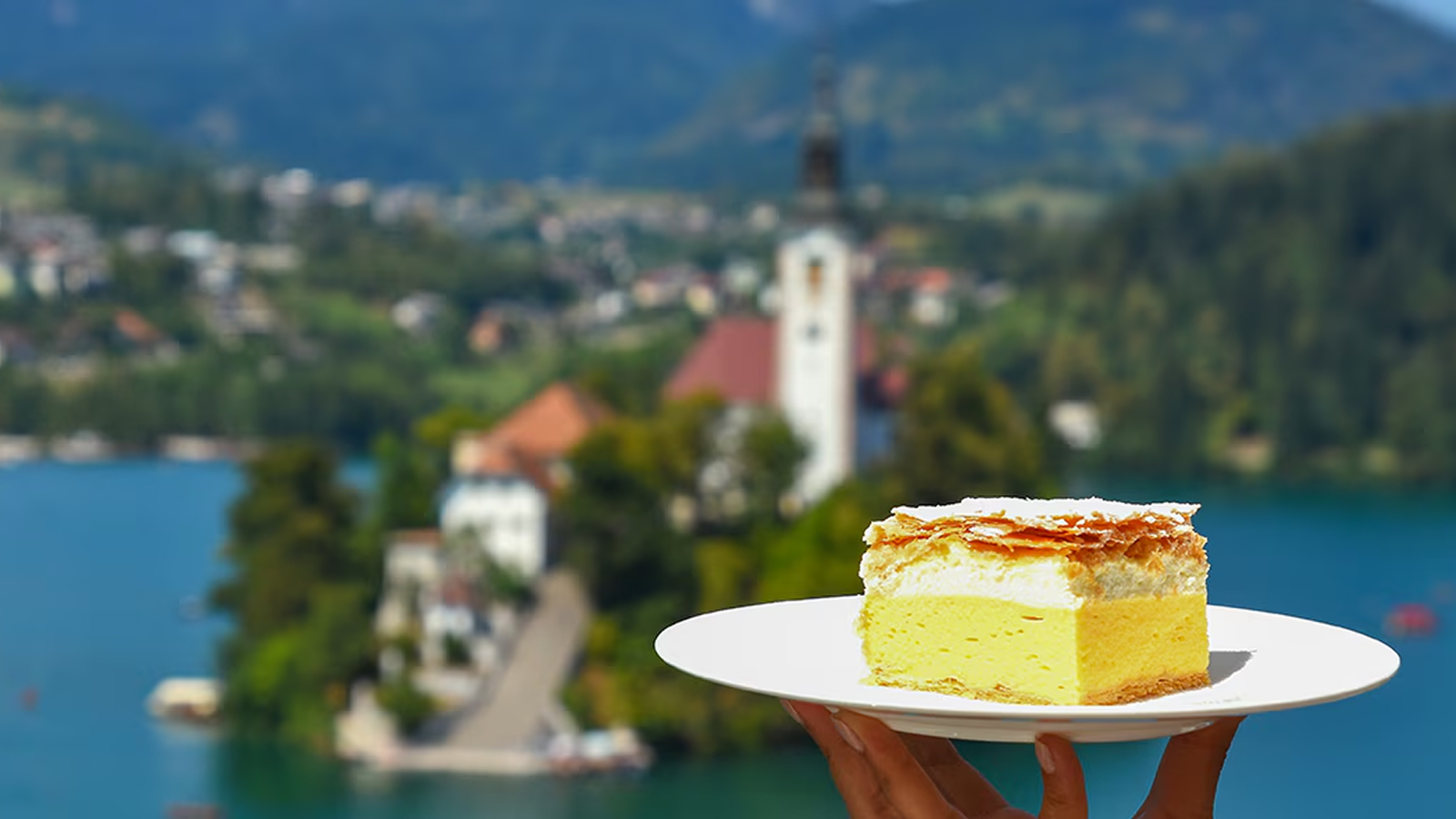
Lake Bled is one of Slovenia’s most famous destinations, and its food culture has one particularly recognizable symbol: Bled cream cake, or kremšnita.
The area also offers restaurants serving Slovenian and alpine-inspired cuisine.
A visit to Bled is an opportunity to combine iconic scenery with local food.
Try: Bled cream cake, štruklji, trout and traditional Slovenian dishes.
Best for: Iconic Slovenian experiences.
12. Lake Bohinj
Lake Bohinj sits in the heart of the Julian Alps and has a strong connection with traditional mountain cuisine.
Local dairy products, cheese, trout and farm-produced ingredients are important parts of the area’s food identity.
The surrounding villages also offer opportunities to experience traditional rural Slovenia.
Try: Bohinj cheese, trout, dairy products and alpine dishes.
Best for: Mountain food and farm experiences.
13. Kranjska Gora
Kranjska Gora is better known internationally as an alpine destination, but its location makes it an interesting food stop as well.
Traditional dishes here reflect the cuisine of the Julian Alps and nearby regions.
After hiking or skiing, hearty local food can be particularly satisfying.
Try: jota, štruklji, mountain cheeses and traditional meat dishes.
Best for: Outdoor adventures combined with local food.
14. Bovec
Bovec is located in the dramatic Soča Valley and is surrounded by mountains.
The region has its own food traditions, with trout from the Soča River being one of the most recognizable local ingredients.
The town works particularly well for travelers who want to combine adventure activities with regional food.
Try: Soča trout, local cheeses, hearty mountain dishes and regional desserts.
Best for: Adventure and food travel.
15. Kobarid
Kobarid is one of the most interesting culinary destinations in the Soča Valley.
The area is known for its connection to local mountain cuisine and traditional ingredients.
The famous Kobarid dumplings, or kobariški krafi, are among the regional specialties worth trying.
Try: kobariški krafi, trout, local cheeses and traditional dishes.
Best for: Travelers interested in regional culinary traditions.
16. Radovljica
Radovljica is a charming historic town with a strong connection to Slovenian culinary heritage.
The town is particularly associated with honey and beekeeping, reflecting Slovenia’s long beekeeping tradition.
It is also a useful stop for travelers exploring the wider Upper Carniola region.
Try: honey products, traditional Slovenian dishes and local desserts.
Best for: Heritage and traditional food.
17. Škofja Loka
Škofja Loka is one of Slovenia’s most historic towns and offers an atmospheric setting for discovering traditional cuisine.
Its location between Ljubljana and the mountains makes it a convenient food stop on a wider Slovenia itinerary.
Look for traditional pastries, local dishes and seasonal ingredients.
Try: traditional pastries, štruklji and regional dishes.
Best for: Historic towns and traditional cuisine.
18. Kamnik
Kamnik sits at the foothills of the Kamnik-Savinja Alps and combines mountain scenery with regional food traditions.
The surrounding area is known for farms, mountain products and local specialties.
Kamnik is also associated with local craft beer, making it an interesting destination for travelers who enjoy pairing food with regional drinks.
Try: local cheeses, traditional dishes and craft beer.
Best for: Mountain food experiences.
19. Logar Valley
The Logar Valley is one of Slovenia’s most beautiful alpine landscapes.
Food experiences here are closely connected to rural life and local farms.
Instead of looking for a large concentration of restaurants, travelers should focus on traditional farm-style meals and locally produced ingredients.
Try: homemade dairy products, mountain dishes, seasonal produce and traditional desserts.
Best for: Slow travel and farm cuisine.
20. Celje
Celje is one of Slovenia’s major historic cities and a useful destination for exploring the culinary traditions of central and eastern Slovenia.
Its location makes it convenient for combining city sightseeing with food experiences in the surrounding countryside.
Try: regional Slovenian dishes, local pastries and seasonal cuisine.
Best for: Short city breaks.
21. Novo Mesto
Novo Mesto is an important destination in the Dolenjska region and is particularly interesting for wine travelers.
The surrounding countryside has vineyards and agricultural traditions that influence local cuisine.
The region is associated with Cviček, a distinctive Slovenian wine.
Try: Cviček, regional dishes, cured meats and seasonal produce.
Best for: Wine and countryside travel.
22. Črnomelj
Črnomelj is located in Bela Krajina, a region in southeastern Slovenia with a distinctive cultural and culinary identity.
Local food traditions here differ from those found in the Alps or on the coast.
Travelers can explore traditional dishes, local wines and regional specialties.
Try: Bela Krajina dishes, local wines, lamb and traditional pastries.
Best for: Discovering Slovenia’s lesser-known culinary regions.
23. Murska Sobota
Murska Sobota is the gateway to Prekmurje, one of Slovenia’s most distinctive food regions.
The cuisine here has strong Central European and neighboring regional influences.
One of the area’s best-known specialties is prekmurska gibanica, a layered pastry made with several fillings.
Try: prekmurska gibanica, bograč and traditional Prekmurje dishes.
Best for: Travelers seeking regional Slovenian cuisine.
24. Kranj
Kranj is an easy food stop for travelers exploring the northern part of Slovenia.
The city offers restaurants, cafés and bakeries where visitors can experience everyday Slovenian food culture.
Its location also makes it convenient for combining urban food experiences with trips toward the Alps.
Try: traditional pastries, Slovenian comfort food and local bakery specialties.
Best for: Short food stops and regional exploration.
25. Portorož
Portorož provides a more polished coastal dining experience.
The resort town is known for hotels, restaurants and Adriatic cuisine, making it particularly suitable for travelers who want food combined with a seaside getaway.
Its location also makes it easy to explore Piran, Izola and the wider Slovenian Istrian region.
Try: seafood, Istrian dishes, local olive oil and Slovenian wines.
Best for: Coastal escapes and upscale dining.
Best Slovenian Food Regions to Explore
If you want to organize your trip around food rather than individual cities, Slovenia can be divided into several culinary areas.
1. Alpine Slovenia
Best destinations: Bled, Bohinj, Kranjska Gora, Bovec, Kobarid and Logar Valley.
Expect hearty dishes, dairy products, mountain cheeses, trout and traditional farm cuisine.
2. Slovenian Istria
Best destinations: Piran, Koper and Izola.
Expect seafood, olive oil, vegetables, herbs and Mediterranean-style cooking.
3. Karst
Best destinations: Sežana and Komen.
This region is particularly interesting for Kraški pršut, Teran and other cured or preserved products.
4. Brda & Vipava Valley
These are among the country’s most attractive regions for food and wine tourism.
Expect vineyards, seasonal fruit, local wines, farm products and long countryside meals.
5. Styria
Best destinations: Maribor and Ptuj.
This region is particularly interesting for wine, pumpkin seed oil and hearty regional cuisine.
6. Dolenjska
Best destination: Novo Mesto.
Wine and rural food traditions are central to the region, with Cviček being one of its best-known wines.
7. Prekmurje
Best destination: Murska Sobota and the surrounding countryside.
This region has a distinctive cuisine and is particularly worth visiting for traditional pastries and hearty regional dishes.
15 Traditional Slovenian Foods to Try
A culinary trip to Slovenia should include more than restaurants.
Look for these traditional dishes and ingredients:
- Štruklji – rolled dumplings with different sweet or savory fillings.
- Potica – traditional rolled cake, often associated with walnuts.
- Jota – hearty soup or stew traditionally made with beans, sauerkraut or sour turnip and potatoes.
- Kranjska klobasa – a well-known Slovenian sausage.
- Prekmurska gibanica – layered pastry from Prekmurje.
- Kobariški krafi – traditional dumplings associated with Kobarid.
- Bled kremšnita – the famous cream cake associated with Bled.
- Kraški pršut – dry-cured Karst ham.
- Teran – distinctive red wine from the Karst region.
- Cviček – traditional wine associated with Dolenjska.
- Soča trout – an important regional ingredient in the Soča Valley.
- Bohinj cheese – a traditional alpine dairy product.
- Bograč – a hearty stew particularly associated with Prekmurje.
- Idrijski žlikrofi – traditional dumplings associated with Idrija.
- Local honey – Slovenia has a particularly strong beekeeping tradition.
Best Slovenian Wine Regions
Slovenia is an excellent destination for travelers who enjoy combining food with wine.
Brda
Known for vineyard landscapes and wines that pair well with local produce.
Vipava Valley
A particularly attractive destination for vineyard visits, wine tasting and traditional food.
Karst
Known for Teran and its pairing with Karst specialties such as pršut.
Dolenjska
Known for Cviček and rural wine traditions.
Štajerska
The northeastern wine-growing area around Maribor and Ptuj offers a wide range of wine experiences.
Best Food Experiences in Slovenia
A food trip doesn’t have to revolve around restaurants.
Consider adding these experiences to your itinerary:
Visit a Local Market
Ljubljana’s Central Market is a good starting point for seeing seasonal Slovenian produce.
Visit a Farm
Rural tourism is an excellent way to experience traditional food and local ingredients.
Go Wine Tasting
Brda, Vipava Valley, Karst and Dolenjska are particularly suited to wine-focused trips.
Try a Traditional Gostilna
A gostilna is a traditional type of Slovenian inn or restaurant. These establishments can be a good place to experience regional cooking.
Explore Local Bakeries
Pastries and baked goods provide an easy way to experience everyday Slovenian food culture.
Combine Food With Hiking
The alpine regions make it easy to pair outdoor activities with traditional mountain meals.
Best Time for a Food Trip to Slovenia
Slovenia can be visited throughout the year, but different seasons offer different culinary experiences.
Spring
Spring brings fresh vegetables, herbs and the beginning of the outdoor dining season.
Best for: Ljubljana, Istria and countryside food trips.
Summer
Summer is ideal for coastal seafood, outdoor dining, fresh produce and vineyard visits.
Best for: Piran, Izola, Koper, Brda and Vipava Valley.
Autumn
Autumn is particularly appealing for wine travelers.
The countryside becomes associated with grape harvesting, seasonal produce and hearty dishes.
Best for: Brda, Vipava Valley, Karst, Maribor and Dolenjska.
Winter
Winter is a good time for hearty Slovenian dishes, traditional desserts and cozy restaurants.
Best for: Ljubljana, Bled, Bohinj and alpine destinations.
3-Day Slovenia Food Itinerary
Day 1 — Ljubljana
- Explore Ljubljana’s historic center
- Visit the Central Market
- Try traditional Slovenian dishes
- Visit a local bakery
- Enjoy dinner at a Slovenian restaurant
Day 2 — Bled & Bohinj
- Visit Lake Bled
- Try Bled cream cake
- Continue toward Lake Bohinj
- Taste local alpine products
- Enjoy a traditional mountain-style dinner
Day 3 — Brda or Vipava Valley
- Drive toward the wine country
- Visit a vineyard
- Enjoy a long regional lunch
- Taste Slovenian wines
- Explore nearby villages and countryside
7-Day Slovenia Food Itinerary
Days 1–2: Ljubljana
Explore the capital’s restaurants, markets and traditional cuisine.
Day 3: Bled & Bohinj
Experience alpine food, dairy products and traditional desserts.
Day 4: Soča Valley
Travel through Bovec and Kobarid and try local trout and regional specialties.
Day 5: Brda
Spend the day visiting vineyards and enjoying local food.
Day 6: Karst
Explore Sežana or Komen and try pršut, Teran and regional dishes.
Day 7: Slovenian Coast
Finish your trip in Piran, Koper or Izola with fresh seafood and Istrian cuisine.
Tips for a Slovenian Food Trip
1. Don’t Stay Only in Ljubljana
Ljubljana offers plenty of variety, but Slovenia’s regional cuisines become much more interesting once you travel outside the capital.
2. Look for Seasonal Food
Local menus often change with the seasons, so ask what ingredients are currently available.
3. Explore Wine Regions
Brda, Vipava Valley, Karst and Dolenjska can add a completely different dimension to your food trip.
4. Try Regional Specialties
Instead of ordering familiar European dishes, look for foods associated with the particular region you’re visiting.
5. Visit Rural Areas
Some of Slovenia’s most interesting food experiences are found in farms, vineyards and traditional inns rather than large city restaurants.
6. Leave Room for Dessert
Slovenian cuisine has plenty of traditional pastries and desserts worth trying.
7. Don’t Rush
Food culture in Slovenia is closely connected to countryside travel, wine and seasonal produce. A slower itinerary can make the experience much more enjoyable.
Frequently Asked Questions
What is Slovenia famous for in food?
Slovenia is known for dishes such as štruklji, potica, jota, Kranjska klobasa, prekmurska gibanica and regional specialties such as Kraški pršut.
What is the best food destination in Slovenia?
Ljubljana is a convenient starting point because it brings together traditional Slovenian dishes, modern restaurants, markets and food experiences. However, different regions specialize in different cuisines.
Is Slovenian food similar to Italian food?
Slovenian cuisine has some Mediterranean influences, particularly along the Adriatic coast, but the country’s food culture also includes strong Alpine, Central European and Balkan influences.
What food should I try in Ljubljana?
Look for štruklji, potica, jota, Kranjska klobasa and other traditional Slovenian dishes. The city’s market is also useful for exploring local ingredients.
What wine is Slovenia known for?
Slovenia produces a wide range of wines. Teran is associated with the Karst region, while Cviček is associated with Dolenjska. Brda and Vipava Valley are also important wine destinations.
Is Slovenia good for food tourism?
Yes. Its compact size makes it possible to experience several distinct culinary regions within a relatively short trip.
What is Slovenia’s famous dessert?
Several desserts are important to Slovenian food culture. Bled cream cake is particularly famous among travelers, while potica and prekmurska gibanica are important traditional pastries.
What is a traditional Slovenian restaurant called?
A traditional Slovenian inn or restaurant is often called a gostilna.
Final Thoughts
Slovenia is an excellent destination for travelers who want to combine food, wine, nature and culture.
Its compact geography makes it possible to experience very different culinary traditions within a single trip. You can begin with traditional dishes and markets in Ljubljana, explore alpine cuisine around Bled and Bohinj, taste trout in the Soča Valley, discover vineyards in Brda and Vipava Valley, enjoy Karst specialties around Sežana, and finish with seafood on the Adriatic coast.
For a first culinary trip, Ljubljana, Bled, Bohinj, the Soča Valley, Brda, Vipava Valley, the Karst and the Slovenian coast provide a strong introduction to the country’s regional food culture.
The real appeal of Slovenian food, however, is not just the dishes themselves. It is the connection between local ingredients, landscapes, farms, vineyards, traditions and the people who produce them.