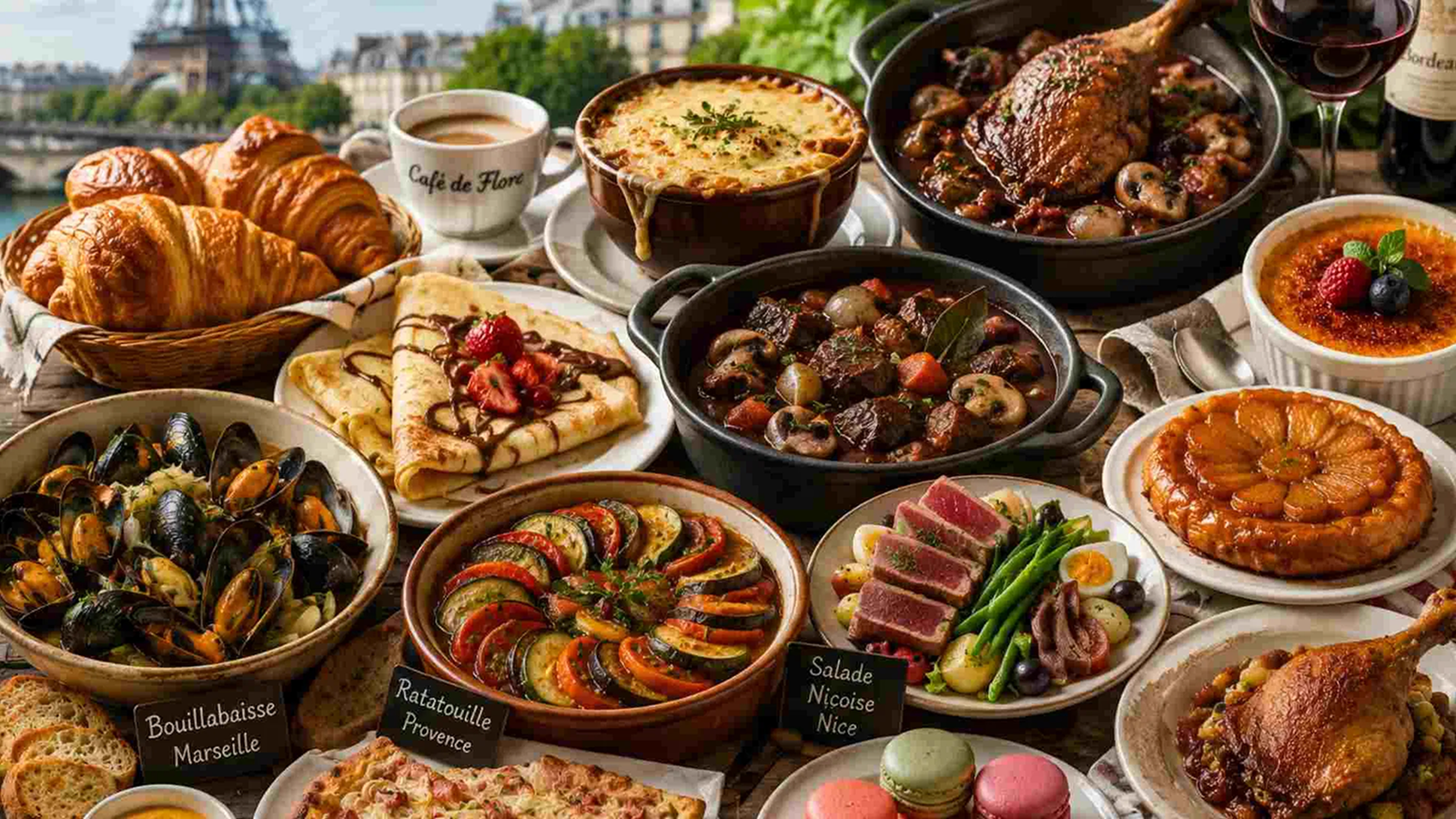
France is one of the world’s most influential food destinations, but French cuisine is far from being one single style of cooking.
Each region has its own ingredients, traditions, specialties and dining culture. Lyon is associated with traditional bouchons, Bordeaux with wine and regional cuisine, Normandy with butter, cream and seafood, Provence with Mediterranean ingredients, while the French Riviera brings together Mediterranean and Provençal influences.
For travelers, exploring France through food can be just as rewarding as visiting its landmarks. Local markets, bakeries, cheese shops, vineyards, seafood restaurants, food halls and traditional restaurants provide opportunities to experience each region through its cuisine.
In this guide, we explore 25 of the best food destinations in France in 2026, including major culinary cities, wine regions, coastal destinations and smaller towns known for regional specialties.
Quick Comparison Table
| # | Food Destination | Region | Known For | Best Culinary Experience |
|---|---|---|---|---|
| 1 | Lyon | Auvergne-Rhône-Alpes | Bouchons & Traditional Cuisine | Local Restaurants |
| 2 | Paris | Île-de-France | Haute Cuisine & Bakeries | Food Tours |
| 3 | Bordeaux | Nouvelle-Aquitaine | Wine & Regional Food | Wine Experiences |
| 4 | Marseille | Provence-Alpes-Côte d’Azur | Bouillabaisse & Seafood | Seafood |
| 5 | Nice | French Riviera | Niçoise Cuisine | Markets & Restaurants |
| 6 | Dijon | Burgundy | Mustard & Burgundy Cuisine | Food & Wine |
| 7 | Strasbourg | Alsace | Alsatian Cuisine | Traditional Restaurants |
| 8 | Toulouse | Occitanie | Cassoulet | Regional Cuisine |
| 9 | Lille | Hauts-de-France | Northern French Cuisine | Markets & Brasseries |
| 10 | Nantes | Pays de la Loire | Atlantic Cuisine | Seafood & Markets |
| 11 | Rouen | Normandy | Normandy Cuisine | Markets |
| 12 | Bordeaux Wine Country | Nouvelle-Aquitaine | Wine & Gastronomy | Vineyards |
| 13 | Reims | Champagne | Champagne & Regional Food | Champagne Houses |
| 14 | Annecy | Auvergne-Rhône-Alpes | Alpine Cuisine | Cheese & Local Food |
| 15 | Aix-en-Provence | Provence | Provençal Cuisine | Markets |
| 16 | Avignon | Provence | Rhône Valley Food | Markets & Restaurants |
| 17 | Montpellier | Occitanie | Mediterranean Cuisine | Markets |
| 18 | Biarritz | Nouvelle-Aquitaine | Basque Cuisine | Seafood & Pintxos |
| 19 | Dijon Wine Region | Burgundy | Burgundy Wine & Food | Wine Tasting |
| 20 | Bayonne | Nouvelle-Aquitaine | Ham & Basque Cuisine | Local Markets |
| 21 | Tours | Loire Valley | Loire Cuisine & Wine | Food & Wine |
| 22 | Honfleur | Normandy | Seafood | Harbor Restaurants |
| 23 | Sarlat-la-Canéda | Dordogne | Duck & Truffles | Local Markets |
| 24 | Grenoble | Auvergne-Rhône-Alpes | Alpine Cuisine | Mountain Food |
| 25 | Corsica | Mediterranean France | Corsican Cuisine | Island Food |
How We Selected These Food Destinations
France’s culinary culture is deeply regional, so this list focuses on destinations where food is closely connected to local identity.
We considered:
- Regional specialties
- Traditional restaurants
- Local markets
- Cheese and charcuterie
- Wine regions
- Seafood
- Bakeries and pastries
- Food-producing regions
- Culinary traditions
- Food festivals and markets
- Local ingredients
- Culinary experiences for travelers
The goal is not simply to list France’s largest cities, but to highlight destinations where travelers can experience distinctive regional food.
1. Lyon
Lyon is widely regarded as one of France’s major culinary cities.
The city’s traditional bouchons lyonnais serve hearty regional dishes, while modern restaurants and food markets provide a broader view of contemporary Lyonnaise cuisine.
What to Eat in Lyon
- Quenelles
- Saucisson lyonnais
- Salade lyonnaise
- Tarte à la praline
- Local cheeses
- Traditional charcuterie
Best Food Experiences
Explore the historic neighborhoods around Vieux Lyon and Presqu’île, then visit Les Halles de Lyon Paul Bocuse for an introduction to regional ingredients and specialties.
Best for: Traditional French cuisine, food markets and culinary history.
2. Paris
Paris is arguably the easiest destination in France for experiencing the country’s culinary diversity in one place.
From neighborhood bakeries and cheese shops to Michelin-starred restaurants and historic brasseries, the city offers an enormous range of food experiences.
What to Eat in Paris
- Croissants
- Baguettes
- French cheeses
- Steak frites
- Crêpes
- Macarons
- French pastries
Best Food Experiences
Explore a traditional food market, visit an independent boulangerie and spend an afternoon discovering specialty food shops in neighborhoods such as Le Marais and Saint-Germain-des-Prés.
Best for: French cuisine, bakeries, pastry, fine dining and food tours.
3. Bordeaux
Bordeaux is best known for its wine, but the city also has a strong culinary culture.
The surrounding region produces wine, seafood, meat, cheese and regional specialties that pair naturally with Bordeaux wines.
What to Eat in Bordeaux
- Canelés
- Oysters
- Entrecôte
- Duck dishes
- Regional cheeses
- Local pastries
Best Food Experiences
Combine a visit to Bordeaux’s historic center with a trip into the surrounding wine country.
Best for: Wine, food pairing and culinary travel.
4. Marseille
Marseille’s cuisine is strongly influenced by the Mediterranean and the city’s long maritime history.
Its signature dish, bouillabaisse, is a traditional fish stew associated with Marseille.
What to Eat in Marseille
- Bouillabaisse
- Mediterranean seafood
- Panisse
- Aïoli
- Tapenade
- Navettes
Best Food Experiences
Explore the Old Port and surrounding neighborhoods, visit local markets and try seafood dishes that reflect Marseille’s Mediterranean identity.
Best for: Seafood, Mediterranean cuisine and food markets.
5. Nice
Nice has a distinctive culinary tradition influenced by Provence and the Mediterranean.
Many classic dishes are built around vegetables, olive oil, herbs and locally available ingredients.
What to Eat in Nice
- Socca
- Salade niçoise
- Ratatouille
- Pissaladière
- Pan bagnat
- Tourte aux blettes
Best Food Experiences
Explore the markets of Vieux Nice and combine food tasting with a walk through the historic center.
Best for: Mediterranean food, markets and casual dining.
6. Dijon
Dijon is the historic capital of Burgundy and is strongly associated with mustard.
The city is also a gateway to one of France’s most important wine-producing regions.
What to Eat in Dijon
- Dijon mustard
- Boeuf bourguignon
- Escargots
- Pain d’épices
- Burgundy cheeses
- Jambon persillé
Best Food Experiences
Explore the city’s food shops and markets, then combine the trip with Burgundy wine experiences.
Best for: Burgundy cuisine, mustard, wine and traditional food.
7. Strasbourg
Strasbourg’s cuisine reflects the cultural history of Alsace, with French and German influences appearing throughout the region’s food traditions.
What to Eat in Strasbourg
- Choucroute garnie
- Flammekueche
- Kougelhopf
- Baeckeoffe
- Munster cheese
- Alsatian pastries
Best Food Experiences
Explore traditional winstubs and local markets in and around the historic center.
Best for: Traditional regional food, Christmas markets and Alsatian cuisine.
8. Toulouse
Toulouse is the culinary heart of southwestern France and is closely associated with hearty regional dishes.
Its most famous specialty is cassoulet, a slow-cooked dish traditionally made with white beans and meat.
What to Eat in Toulouse
- Cassoulet
- Toulouse sausage
- Foie gras
- Southwest French cheeses
- Duck dishes
- Regional pastries
Best Food Experiences
Explore the city’s markets and traditional restaurants, particularly around the historic center.
Best for: Hearty regional cuisine and southwestern French food.
9. Lille
Lille’s location near Belgium has influenced its cuisine, creating a food culture that combines northern French and Flemish traditions.
What to Eat in Lille
- Carbonnade flamande
- Maroilles cheese
- Welsh
- Potjevleesch
- Waffles
- Local beer
Best Food Experiences
Explore the historic center and its markets, then visit traditional estaminets for regional dishes.
Best for: Northern French cuisine, cheese and brasserie culture.
10. Nantes
Nantes is located near France’s Atlantic coast and has a culinary culture influenced by both the Loire region and the nearby ocean.
What to Eat in Nantes
- Seafood
- Muscadet wine
- Galettes
- Fresh oysters
- Local pastries
- Beurre blanc dishes
Best Food Experiences
Explore local markets and combine the city’s food scene with day trips toward the Atlantic coast.
Best for: Seafood, wine and Atlantic cuisine.
11. Rouen
Rouen is a historic city in Normandy with a food culture based around dairy products, apples, seafood and regional specialties.
What to Eat in Rouen
- Normandy cheeses
- Camembert
- Cider
- Calvados
- Seafood
- Apple desserts
Best Food Experiences
Explore the city’s markets and traditional restaurants before continuing through Normandy’s countryside.
Best for: Normandy cuisine, cheese, cider and seafood.
12. Bordeaux Wine Country
The vineyards surrounding Bordeaux are one of France’s most important wine regions.
The area includes famous appellations and historic wine estates, offering travelers the opportunity to connect wine with regional food and landscapes.
What to Experience
- Wine tastings
- Vineyard tours
- Cellar visits
- Local cheese
- Regional cuisine
- Wine-and-food pairing
Best for: Wine enthusiasts, couples and culinary travel.
13. Reims
Reims is at the center of France’s Champagne region and is one of the best destinations for travelers interested in sparkling wine.
Several major Champagne houses have historic cellars in and around the city.
What to Eat and Drink
- Champagne
- Regional cheeses
- Biscuits roses de Reims
- French pastries
- Local charcuterie
- Regional cuisine
Best Food Experiences
Combine a visit to Reims Cathedral with a Champagne cellar tour.
Best for: Champagne, food pairing and luxury culinary travel.
14. Annecy
Annecy’s Alpine location influences its food culture, particularly its use of cheese and mountain ingredients.
The surrounding Haute-Savoie region is known for hearty dishes designed for colder mountain climates.
What to Eat in Annecy
- Tartiflette
- Raclette
- Reblochon cheese
- Crozets
- Local charcuterie
- Alpine desserts
Best Food Experiences
Explore the old town’s markets and restaurants while enjoying views of Lake Annecy.
Best for: Alpine cuisine, cheese and scenic food travel.
15. Aix-en-Provence
Aix-en-Provence is an excellent destination for experiencing Provençal food through markets, bakeries and local restaurants.
The cuisine emphasizes vegetables, olive oil, herbs and Mediterranean ingredients.
What to Eat in Aix-en-Provence
- Calissons
- Tapenade
- Ratatouille
- Provençal vegetables
- Goat cheese
- Olive-based dishes
Best Food Experiences
Visit local markets along the city’s historic streets and sample Provençal specialties.
Best for: Markets, Mediterranean food and slow travel.
16. Avignon
Avignon is an excellent base for exploring the culinary traditions of Provence and the Rhône Valley.
Its location puts travelers close to vineyards, olive producers, farmers’ markets and regional food producers.
What to Eat in Avignon
- Provençal vegetables
- Tapenade
- Goat cheese
- Olives
- Rhône wines
- Local pastries
Best Food Experiences
Explore the city’s markets before venturing into the surrounding countryside.
Best for: Provençal cuisine, markets and wine.
17. Montpellier
Montpellier combines Mediterranean ingredients with a youthful urban food culture.
The city’s proximity to the coast and surrounding vineyards gives it access to seafood, wine and southern French produce.
What to Eat in Montpellier
- Mediterranean seafood
- Oysters
- Local cheeses
- Olive dishes
- Regional wines
- Southern French pastries
Best Food Experiences
Explore local markets and restaurants around the historic center.
Best for: Mediterranean food, wine and markets.
18. Biarritz
Biarritz sits in the French Basque Country, where French and Basque culinary traditions meet.
The Atlantic coastline gives seafood a central role, while Basque cuisine brings distinctive sauces, peppers and preserved foods.
What to Eat in Biarritz
- Basque cake
- Seafood
- Piperade
- Bayonne ham
- Local cheeses
- Pintxos
Best Food Experiences
Explore traditional restaurants and markets while sampling Basque specialties.
Best for: Seafood, Basque cuisine and coastal food travel.
19. Dijon Wine Region
The vineyards surrounding Dijon form part of Burgundy’s celebrated wine landscape.
Travelers can explore villages, vineyards and wine estates while experiencing Burgundy’s food traditions.
What to Experience
- Burgundy wine
- Vineyard visits
- Cheese
- Escargots
- Charcuterie
- Burgundy-style dishes
Best for: Wine lovers, food pairing and countryside travel.
20. Bayonne
Bayonne is one of the key culinary destinations in the French Basque Country.
The city is particularly associated with Jambon de Bayonne, a protected regional specialty.
What to Eat in Bayonne
- Jambon de Bayonne
- Basque cake
- Piperade
- Basque cheeses
- Chocolate
- Local seafood
Best Food Experiences
Explore the historic center and local food shops before venturing into the surrounding Basque Country.
Best for: Charcuterie, Basque cuisine and food markets.
21. Tours
Tours is a useful culinary base for exploring the Loire Valley.
The surrounding region produces wine, cheese, vegetables and other ingredients that appear throughout local cuisine.
What to Eat in Tours
- Loire Valley wines
- Goat cheese
- Rillettes
- Local pastries
- Regional vegetables
- French desserts
Best Food Experiences
Combine a city food tour with visits to nearby vineyards and Loire Valley châteaux.
Best for: Food-and-wine trips and countryside travel.
22. Honfleur
Honfleur is a picturesque Normandy harbor town where seafood plays a central role in the local food scene.
Its location near the coast makes it a natural destination for oysters, mussels and other seafood.
What to Eat in Honfleur
- Oysters
- Mussels
- Scallops
- Normandy cheeses
- Cider
- Apple desserts
Best Food Experiences
Enjoy seafood around the historic harbor and explore local markets.
Best for: Seafood, coastal dining and couples.
23. Sarlat-la-Canéda
Sarlat sits in the Dordogne region, where cuisine is heavily influenced by local farms and traditional southwestern ingredients.
What to Eat in Sarlat
- Duck
- Foie gras
- Truffles
- Walnuts
- Local cheeses
- Regional pastries
Best Food Experiences
Visit the local market and explore the surrounding countryside for traditional food producers.
Best for: Rural food experiences, markets and traditional French cuisine.
24. Grenoble
Grenoble is surrounded by the French Alps and offers a cuisine shaped by mountain traditions.
The surrounding region is known for walnuts, cheeses, charcuterie and hearty dishes.
What to Eat in Grenoble
- Grenoble walnuts
- Alpine cheeses
- Charcuterie
- Gratin dishes
- Regional pastries
- Mountain cuisine
Best Food Experiences
Explore local markets and combine food experiences with mountain excursions.
Best for: Alpine cuisine, markets and outdoor travel.
25. Corsica
Corsica has one of France’s most distinctive regional food cultures.
The island’s mountainous landscape and Mediterranean location influence its ingredients, while traditional Corsican cuisine emphasizes pork, chestnuts, cheese, herbs and local seafood.
What to Eat in Corsica
- Brocciu
- Figatellu
- Coppa
- Lonzu
- Chestnut-based foods
- Corsican seafood
Best Food Experiences
Explore local markets and small producers while traveling through the island’s coastal towns and mountain villages.
Best for: Island cuisine, local producers and Mediterranean food.
Quick Summary: 1–25
| Destination | Signature Food Focus | Best Culinary Experience |
|---|---|---|
| Lyon | Bouchons & regional cuisine | Traditional restaurants |
| Paris | Pastries & fine dining | Food tours |
| Bordeaux | Wine & regional food | Vineyard visits |
| Marseille | Bouillabaisse & seafood | Seafood restaurants |
| Nice | Niçoise cuisine | Markets |
| Dijon | Mustard & Burgundy cuisine | Food + wine |
| Strasbourg | Alsatian cuisine | Winstubs |
| Toulouse | Cassoulet | Traditional restaurants |
| Lille | Northern French cuisine | Estaminets |
| Nantes | Seafood & Muscadet | Markets |
| Rouen | Cheese & cider | Local markets |
| Bordeaux Wine Country | Wine & gastronomy | Vineyard experiences |
| Reims | Champagne | Cellar tours |
| Annecy | Alpine cheese | Mountain cuisine |
| Aix-en-Provence | Provençal food | Local markets |
| Avignon | Provençal & Rhône cuisine | Markets |
| Montpellier | Mediterranean cuisine | Restaurants & markets |
| Biarritz | Basque cuisine | Seafood & pintxos |
| Dijon Wine Region | Burgundy wine | Vineyard visits |
| Bayonne | Ham & Basque food | Food shops |
| Tours | Loire food & wine | Food + wine |
| Honfleur | Seafood | Harbor restaurants |
| Sarlat-la-Canéda | Duck & truffles | Local markets |
| Grenoble | Alpine cuisine | Regional food |
| Corsica | Island cuisine | Local producers |
Best Food Destinations in France by Culinary Style
🥐 Best for French Pastries & Bakeries
- Paris
- Lyon
- Strasbourg
- Bordeaux
- Nice
Look for independent boulangeries and pâtisseries rather than limiting your experience to large chains.
🧀 Best for Cheese
- Annecy
- Lyon
- Dijon
- Strasbourg
- Normandy
- Grenoble
France’s cheese culture is highly regional, so trying local varieties is part of the experience.
🍷 Best for Wine
- Bordeaux
- Burgundy
- Reims
- Loire Valley
- Rhône Valley
- Provence
🦪 Best for Seafood
- Marseille
- Nice
- Biarritz
- Honfleur
- Nantes
- Normandy
🥩 Best for Traditional Regional Cuisine
- Lyon
- Toulouse
- Dijon
- Strasbourg
- Lille
- Sarlat-la-Canéda
🫒 Best for Mediterranean Cuisine
- Nice
- Marseille
- Aix-en-Provence
- Avignon
- Montpellier
- Corsica
French Regional Food You Should Try
Burgundy
Look for:
- Boeuf bourguignon
- Escargots
- Dijon mustard
- Burgundy wines
- Jambon persillé
Provence
Try:
- Ratatouille
- Tapenade
- Aioli
- Pissaladière
- Provençal vegetables
Normandy
Look for:
- Camembert
- Seafood
- Cider
- Calvados
- Apple desserts
Alsace
Try:
- Choucroute garnie
- Flammekueche
- Baeckeoffe
- Kougelhopf
Southwest France
Look for:
- Cassoulet
- Duck
- Foie gras
- Toulouse sausage
- Regional cheeses
French Basque Country
Try:
- Piperade
- Basque cake
- Bayonne ham
- Pintxos
- Local seafood
Alps
Look for:
- Raclette
- Tartiflette
- Reblochon
- Crozets
- Mountain charcuterie
Best Time for Food Travel in France
France can be explored through food throughout the year, but certain seasons are particularly useful for specific culinary experiences.
Spring — March to May
Spring markets become increasingly active, with fresh produce appearing across many regions.
Good for:
- Provence
- Paris
- Lyon
- Bordeaux
- Normandy
Summer — June to August
Summer is particularly good for Mediterranean cuisine, seafood, outdoor markets and vineyard travel.
Good for:
- Nice
- Marseille
- Provence
- Biarritz
- Bordeaux
Autumn — September to November
Autumn is an excellent season for vineyards, harvest-related experiences and hearty regional cuisine.
Good for:
- Bordeaux
- Burgundy
- Champagne
- Loire Valley
- Rhône Valley
Winter — December to February
Winter is well suited to hearty dishes, cheese-focused Alpine cuisine and festive food markets.
Good for:
- Strasbourg
- Lyon
- Annecy
- Grenoble
- Paris
How to Experience French Food Like a Local
1. Visit a Local Market
Markets are one of the easiest ways to understand a region’s food culture.
Look for:
- Seasonal produce
- Cheese
- Charcuterie
- Bread
- Seafood
- Regional specialties
2. Try Regional Specialties
Don’t order the same dishes everywhere. France’s culinary identity is highly regional.
3. Visit a Boulangerie
Try freshly baked bread and pastries from independent bakeries.
4. Explore Food Halls
Large food markets can introduce you to several regional products in one location.
5. Pair Food With Regional Wine
Where appropriate, explore local wine alongside local food.
6. Visit Producers
Depending on the region, you can visit:
- Vineyards
- Cheese producers
- Cider producers
- Chocolate makers
- Olive producers
- Charcuterie producers
7. Leave Room for Dessert
French pastry culture is an important part of the culinary experience.
Frequently Asked Questions
What is the best food destination in France?
France has several major culinary centers, including Lyon, Paris, Bordeaux, Nice and Strasbourg. The best destination depends on whether you are interested in traditional cuisine, pastries, wine, seafood or regional food.
Which French city is best for food?
Lyon is particularly associated with traditional French cuisine and bouchons, while Paris offers an enormous range of culinary experiences from bakeries to fine dining.
What is France’s most famous food?
French cuisine includes hundreds of regional dishes rather than one national dish. Well-known examples include croissants, baguettes, cheese, ratatouille, bouillabaisse, cassoulet and boeuf bourguignon.
Where should I go in France for wine?
Bordeaux, Burgundy, Champagne and the Loire Valley are among the country’s best-known wine regions.
Where can I find the best seafood in France?
Marseille, Normandy, Honfleur, Biarritz, Nantes and the Atlantic and Mediterranean coasts offer strong seafood traditions.
What is the best place for French pastries?
Paris is particularly well known for its bakeries and pâtisseries, but excellent regional pastry traditions can be found throughout France.
What food should I try in Lyon?
Quenelles, salade lyonnaise, saucisson lyonnais and regional cheeses are among the specialties associated with Lyon.
What should I eat in Provence?
Ratatouille, tapenade, aioli, Provençal vegetables, goat cheese and olive-based dishes are good examples of the region’s cuisine.
Is France good for a food-focused holiday?
Yes. France is particularly suitable for food-focused travel because regional cuisines, wine areas, markets and food producers are spread throughout the country.
How many days do you need for a food trip in France?
A week can work for focusing on one culinary region. For a broader food journey combining cities, vineyards and countryside, 10–14 days or longer provides more flexibility.
Conclusion
France is one of the world’s most rewarding destinations for culinary travel because its food culture is deeply connected to geography and regional traditions.
Lyon offers traditional bouchon cuisine, Paris provides an enormous range of bakeries, markets and restaurants, while Bordeaux, Burgundy and Champagne connect food with some of France’s most important wine regions.
Along the coast, Marseille, Nice, Biarritz and Honfleur showcase seafood and Mediterranean or Atlantic influences. In the countryside, destinations such as Sarlat-la-Canéda, the Loire Valley and Provence provide opportunities to experience local producers, markets and traditional dishes.
The best way to experience French food is not simply to search for famous restaurants. Visit markets, try regional specialties, explore independent bakeries, taste local products and connect each dish with the region where it originated.
From a simple baguette and cheese to a long regional meal paired with local wine, France offers countless ways to make food part of the journey.