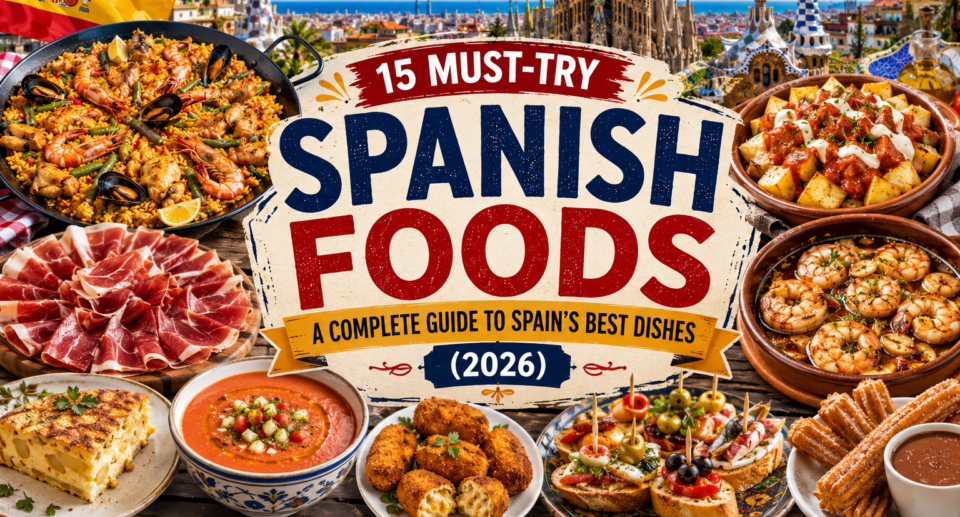
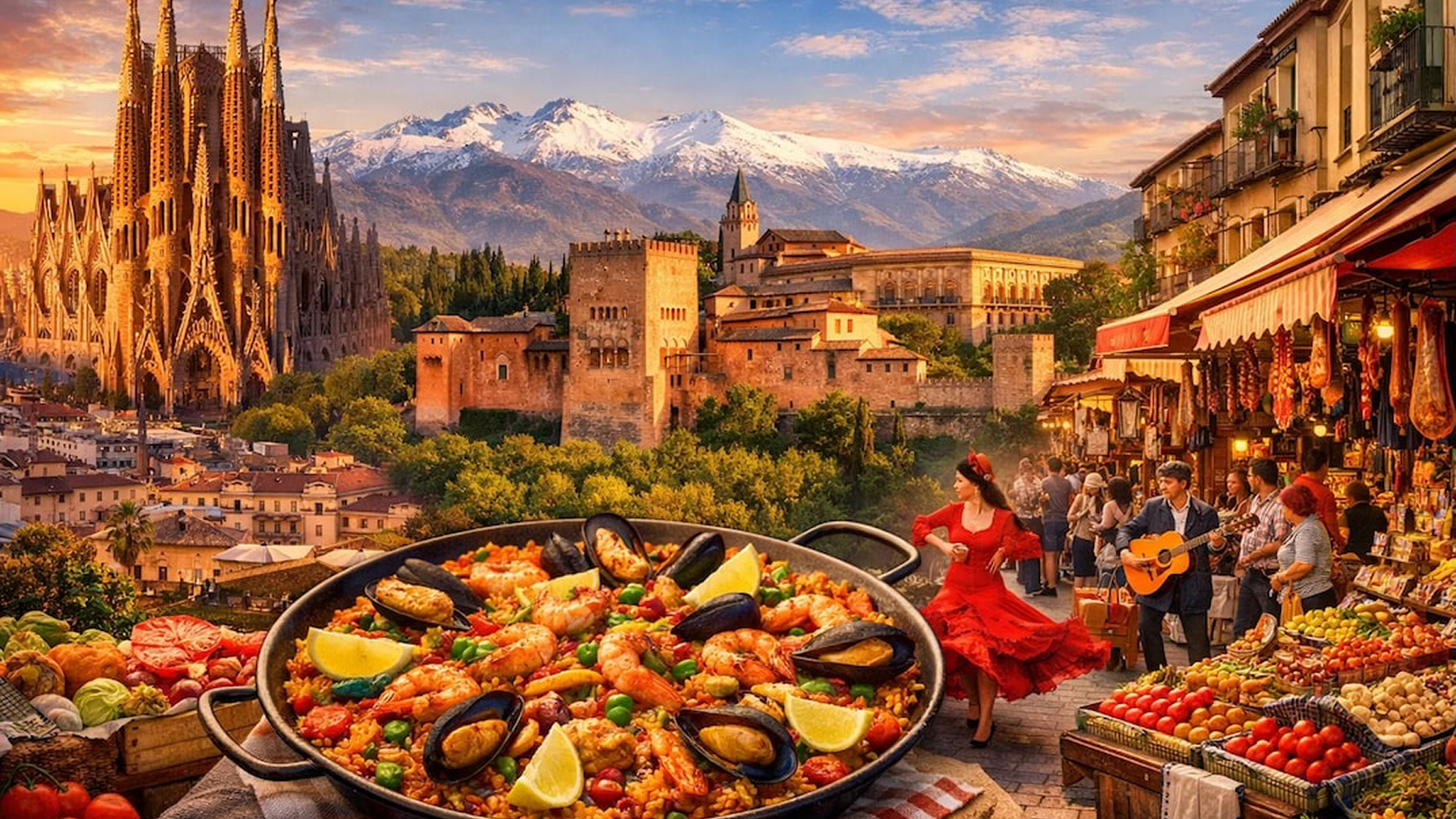
Spain is one of Europe’s most exciting destinations for food lovers.
From pintxos bars in northern Spain and seafood restaurants along the Atlantic coast to tapas in Andalusia and paella in Valencia, Spanish cuisine changes dramatically from one region to another.
Food is also deeply connected to everyday life in Spain. Markets, bakeries, neighborhood bars, family-run restaurants and traditional festivals all play an important role in local food culture.
A culinary trip through Spain can therefore be much more than a list of restaurants. It can involve visiting markets in Madrid, exploring pintxos bars in San Sebastián, tasting sherry in Jerez, discovering seafood in Galicia or following the origins of paella around Valencia.
In this guide, we explore 25 of the best food destinations in Spain for 2026, covering major cities, coastal towns, wine regions and destinations known for distinctive regional cuisine.
Spanish Food Destinations at a Glance
| Destination | Best Known For | Best For |
|---|---|---|
| Madrid | Tapas & markets | First-time food trips |
| Barcelona | Catalan cuisine | Food & culture |
| San Sebastián | Pintxos | Food-focused trips |
| Bilbao | Basque cuisine | Pintxos & modern food |
| Valencia | Paella | Rice dishes |
| Seville | Tapas | Andalusian cuisine |
| Málaga | Seafood & tapas | Coastal food |
| Granada | Tapas culture | Budget-friendly food |
| Córdoba | Andalusian cuisine | History & food |
| Cádiz | Seafood | Coastal dining |
| Jerez de la Frontera | Sherry | Wine travel |
| Santiago de Compostela | Galician cuisine | Seafood & pilgrimage |
| A Coruña | Seafood | Atlantic cuisine |
| Vigo | Seafood | Fish & shellfish |
| Oviedo | Asturian cuisine | Regional food |
| Sanlúcar de Barrameda | Seafood & sherry | Coastal food |
| Salamanca | Castilian cuisine | Traditional dishes |
| Segovia | Roast meats | Regional cuisine |
| Zaragoza | Aragonese cuisine | Local food |
| Girona | Catalan cuisine | Gastronomy & culture |
| Palma de Mallorca | Balearic cuisine | Island food |
| Tenerife | Canarian cuisine | Island food |
| La Rioja | Wine | Wine & food |
| Priorat | Wine | Wine lovers |
| León | Tapas & traditional food | Food-focused city breaks |
How We Selected These Food Destinations
Spain’s culinary identity varies considerably by region, so this list focuses on destinations where food is an important part of the local travel experience.
We considered:
- Regional culinary traditions
- Traditional dishes
- Local ingredients
- Food markets
- Tapas or pintxos culture
- Seafood traditions
- Wine regions
- Historic food districts
- Local producers
- Opportunities for food-focused travel
The list includes both major cities and smaller destinations where regional cuisine is especially important.
25 Best Food Destinations in Spain
1. Madrid
Madrid is one of the easiest places in Spain to experience a broad range of Spanish cuisine.
The capital brings together food traditions from across the country, alongside its own specialties.
Markets, tapas bars, traditional restaurants and modern Spanish dining all exist side by side.
The city’s historic neighborhoods are particularly useful for food-focused exploration.
Try:
- Cocido madrileño
- Bocadillo de calamares
- Tortilla española
- Churros
- Croquetas
- Jamón ibérico
Best for: First-time visitors and food-focused city breaks.
2. Barcelona
Barcelona combines Catalan culinary traditions with an enormous modern food scene.
The city’s markets are a good introduction to local ingredients, while restaurants range from traditional Catalan establishments to contemporary dining rooms.
Seafood also plays an important role thanks to the city’s Mediterranean location.
Try:
- Escalivada
- Pan con tomate
- Fideuà
- Crema catalana
- Suquet de peix
- Catalan cheeses
Best for: Food, culture and city breaks.
3. San Sebastián
San Sebastián is one of Spain’s most celebrated food destinations.
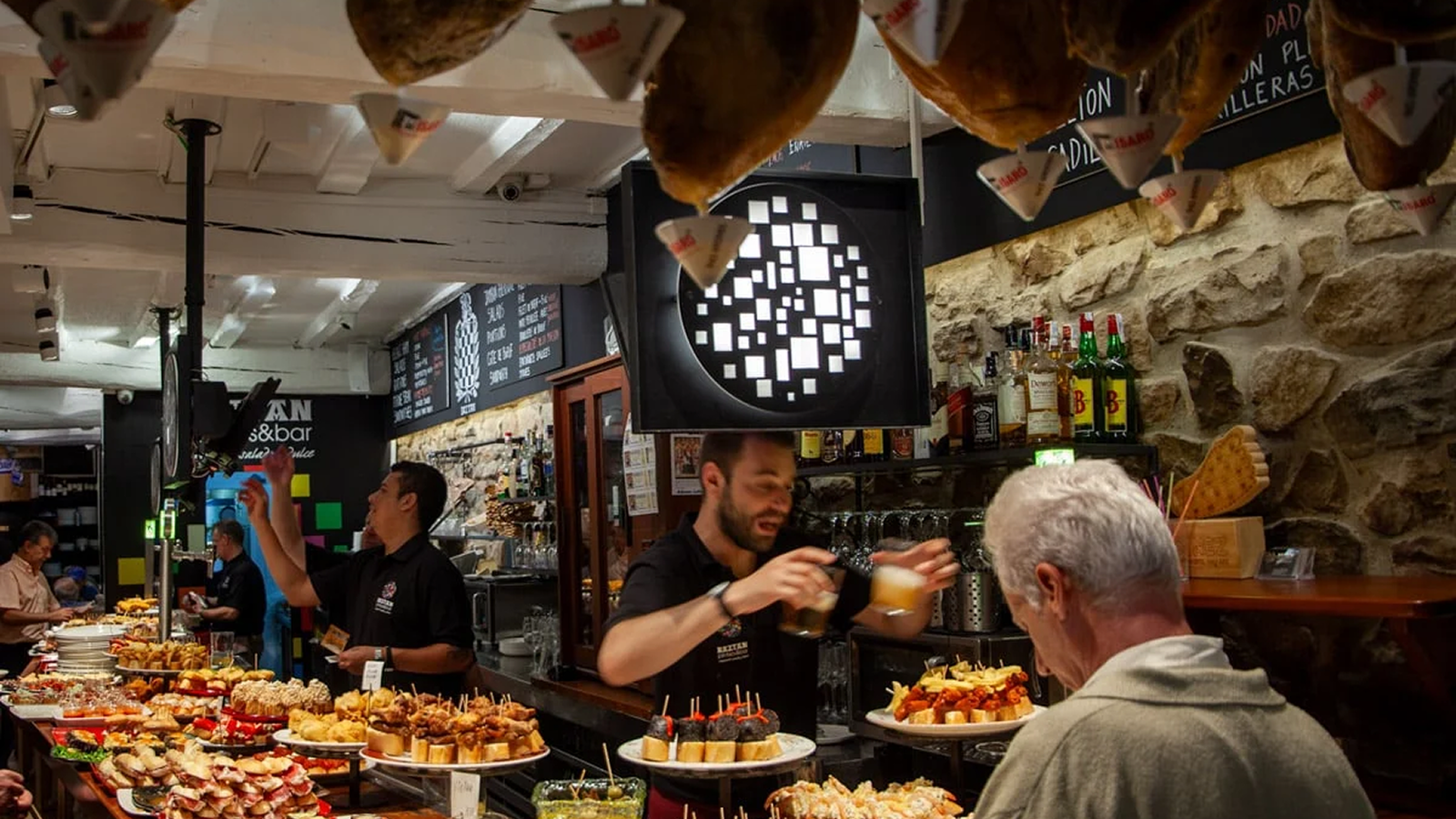
The city is particularly famous for its pintxos, small portions of food traditionally enjoyed with drinks.
The Old Town is the obvious starting point, where travelers can move between bars and sample different specialties.
The wider Basque Country also has a strong culinary tradition.
Try:
- Pintxos
- Gildas
- Basque cheesecake
- Grilled seafood
- Txuleta
- Local cider
Best for: Dedicated food travelers.
4. Bilbao
Bilbao offers another excellent introduction to Basque cuisine.
The city combines traditional taverns with modern restaurants, while the surrounding Basque Country provides opportunities to explore food producers and smaller towns.
Pintxos remain an essential part of the experience.
Try:
- Pintxos
- Bacalao al pil-pil
- Txipirones
- Txuleta
- Basque cheesecake
Best for: Food and culture.
5. Valencia
Valencia is the destination to visit if you want to explore the origins and regional traditions surrounding paella.
The city sits beside the Mediterranean and is surrounded by agricultural landscapes that have long supported rice cultivation.
Beyond paella, Valencian cuisine includes seafood, vegetables, rice dishes and citrus.
Try:
- Paella Valenciana
- Arroz a banda
- Fideuà
- Horchata
- Fartons
- All i pebre
Best for: Rice dishes and Mediterranean cuisine.
6. Seville
Seville is one of the best cities in Spain for traditional tapas culture.
The city’s historic neighborhoods are filled with bars where small dishes can be ordered throughout the day.
Andalusian ingredients such as olive oil, seafood, vegetables and cured meats feature heavily.
Try:
- Salmorejo
- Espinacas con garbanzos
- Jamón
- Fried fish
- Croquetas
- Montaditos
Best for: Tapas and Andalusian food.
7. Málaga
Málaga combines Mediterranean seafood with the broader culinary traditions of Andalusia.
The city’s coastal location means fish and seafood are central to the local food experience.
Málaga is also an excellent base for exploring the wider Costa del Sol.
Try:
- Espetos de sardinas
- Fried fish
- Ajoblanco
- Boquerones
- Porra antequerana
- Local sweet wines
Best for: Seafood and relaxed coastal dining.
8. Granada
Granada has a particularly interesting tapas culture.
Many traditional establishments serve small dishes alongside drinks, making it possible to experience several flavors while exploring the city.
The combination of food, historic neighborhoods and the Alhambra makes Granada especially attractive for first-time visitors.
Try:
- Jamón
- Tortilla
- Croquetas
- Remojón granadino
- Habas con jamón
- Andalusian tapas
Best for: Tapas, history and budget-friendly food travel.
9. Córdoba
Córdoba’s food culture reflects the broader traditions of Andalusia and the city’s long history.
Its historic center is filled with traditional restaurants and tapas bars.
Try:
- Salmorejo
- Flamenquín
- Rabo de toro
- Berenjenas con miel
- Local olive oil
- Andalusian pastries
Best for: History and regional cuisine.
10. Cádiz
Cádiz is one of Andalusia’s strongest destinations for seafood.
The city’s position on the Atlantic coast gives it access to an impressive variety of fish and shellfish.
The historic center is compact enough to explore on foot, making food stops easy to combine with sightseeing.
Try:
- Fried fish
- Tortillitas de camarones
- Tuna
- Seafood rice
- Shellfish
- Local sherry
Best for: Seafood lovers.
11. Jerez de la Frontera
Jerez is one of Spain’s most important destinations for sherry wine.
The city is located in the heart of the Sherry Triangle and offers opportunities to visit bodegas and learn about the region’s wine traditions.
Food and wine are naturally connected here.
Try:
- Sherry
- Jamón ibérico
- Manchego-style cheeses
- Andalusian tapas
- Local seafood
Best for: Wine travelers.
12. Santiago de Compostela
Santiago de Compostela is the culinary heart of Galicia for many travelers exploring northwestern Spain.
Galician cuisine is strongly connected to the Atlantic, with seafood playing an important role.
The city’s historic center is filled with restaurants and traditional food establishments.
Try:
- Pulpo a la gallega
- Empanada gallega
- Padrón peppers
- Galician cheeses
- Seafood
- Tarta de Santiago
Best for: Seafood and cultural travel.
13. A Coruña
A Coruña offers another excellent introduction to Galician food.
Its location on the Atlantic coast makes seafood one of the major attractions.
The city’s waterfront setting also makes it a pleasant base for combining food with coastal sightseeing.
Try:
- Octopus
- Local shellfish
- Grilled fish
- Galician empanada
- Local cheeses
Best for: Seafood and coastal travel.
14. Vigo
Vigo is one of Spain’s most important seafood destinations.
The city is particularly associated with the fishing industry and access to Atlantic seafood.
For travelers who want to experience Galicia through its seafood culture, Vigo is an excellent choice.
Try:
- Oysters
- Mussels
- Octopus
- Crab
- Local white wines
- Grilled fish
Best for: Seafood-focused trips.
15. Oviedo
Oviedo offers a taste of Asturias, a northern region known for hearty cuisine and distinctive local products.
Asturian food is particularly appealing during cooler months.
Try:
- Fabada asturiana
- Cabrales cheese
- Asturian cider
- Cachopo
- Local sausages
- Rice pudding
Best for: Regional food and traditional cuisine.
16. Sanlúcar de Barrameda
Sanlúcar is located near the mouth of the Guadalquivir River in Andalusia.
The town is strongly associated with seafood and Manzanilla sherry.
It is particularly rewarding for travelers who want to combine coastal food with Andalusian wine culture.
Try:
- Langoustines
- Fried fish
- Seafood
- Manzanilla
- Local tapas
Best for: Seafood and wine.
17. Salamanca
Salamanca offers a more inland Spanish food experience.
The region is known for cured meats, cheeses and hearty Castilian cuisine.
The city’s historic setting makes it easy to combine food exploration with architecture and cultural sightseeing.
Try:
- Jamón ibérico
- Chorizo
- Morcilla
- Local cheeses
- Hornazo
Best for: Traditional Castilian food.
18. Segovia
Segovia is particularly famous for traditional roast dishes.
The city’s historic center and Roman aqueduct make it a popular day trip from Madrid, but food lovers have another reason to stay longer.
Try:
- Cochinillo asado
- Judiones de La Granja
- Cordero asado
- Local pastries
- Regional wines
Best for: Traditional Spanish cuisine.
19. Zaragoza
Zaragoza offers a less internationally famous but highly interesting regional food culture.
Aragonese cuisine emphasizes local vegetables, meats and traditional preparations.
The city’s tapas districts are useful for exploring local dishes in a casual setting.
Try:
- Ternasco de Aragón
- Borrajas
- Jamón
- Local cheeses
- Migas
Best for: Regional cuisine and city breaks.
20. Girona
Girona has become one of Catalonia’s most interesting destinations for food-focused travel.
The city combines historic architecture with a sophisticated culinary scene.
The surrounding Catalan countryside also produces excellent ingredients and wines.
Try:
- Catalan specialties
- Suquet
- Escalivada
- Local cheeses
- Catalan pastries
- Regional wines
Best for: Food and culture.
21. Palma de Mallorca
Palma provides an excellent introduction to Balearic cuisine.
The city combines Mediterranean ingredients with island traditions, while Mallorca’s countryside contributes wine, produce and local specialties.
Try:
- Ensaimada
- Sobrasada
- Tumbet
- Pa amb oli
- Seafood
- Mallorcan wine
Best for: Island food and Mediterranean travel.
22. Tenerife
Tenerife offers a distinctly different Spanish food experience because of its location in the Canary Islands.
Canarian cuisine uses local ingredients and includes dishes that travelers may not encounter on mainland Spain.
Try:
- Papas arrugadas
- Mojo
- Gofio
- Fresh fish
- Canarian cheeses
- Local wines
Best for: Island food and outdoor travel.
23. La Rioja
La Rioja is one of Spain’s most famous wine regions.
A food trip here is naturally centered around vineyards, wineries and traditional regional cuisine.
The region works particularly well as a road trip.
Try:
- Rioja wines
- Lamb
- Local vegetables
- Chorizo
- Regional cheeses
- Pinchos
Best for: Wine and food travel.
24. Priorat
Priorat in Catalonia is another important wine region.
Its dramatic hills and vineyards create a beautiful setting for wine-focused travel.
The region is particularly attractive to travelers who want a quieter alternative to Spain’s major cities.
Try:
- Priorat wines
- Catalan dishes
- Local cheeses
- Olive oil
- Seasonal produce
Best for: Wine lovers and rural travel.
25. León
León combines traditional northern Spanish cuisine with a lively tapas culture.
The city is particularly interesting for travelers who want hearty regional food and a less obvious culinary destination.
Try:
- Cecina
- Morcilla
- Cocido maragato
- Local cheeses
- Tapas
- Regional wines
Best for: Traditional food and city breaks.
Best Spanish Cities for Food Lovers
If you want to build a city-based culinary itinerary, start with:
Madrid
Best for variety and food markets.
Barcelona
Best for Catalan cuisine and Mediterranean food.
San Sebastián
Best for pintxos.
Valencia
Best for paella and rice dishes.
Seville
Best for tapas.
Bilbao
Best for Basque cuisine.
Granada
Best for traditional tapas culture.
Girona
Best for food and culture.
Best Destinations for Tapas
Tapas are an essential part of Spanish food culture, but the experience differs from city to city.
Seville
One of the best destinations for traditional Andalusian tapas.
Granada
Known for its distinctive tapas culture.
Madrid
Excellent for variety and historic tapas bars.
Córdoba
Ideal for combining tapas with sightseeing.
León
Strong local bar and tapas culture.
Málaga
Great for combining tapas with seafood.
Best Destinations for Pintxos
Pintxos are particularly associated with northern Spain and the Basque Country.
San Sebastián
One of Europe’s most famous pintxos destinations.
Bilbao
Excellent combination of traditional and contemporary Basque food.
Vitoria-Gasteiz
Another Basque destination worth considering for food-focused travel.
The best way to experience pintxos is often to visit several establishments rather than staying in one restaurant for an entire meal.
Best Destinations for Seafood
Spain’s coastline provides an enormous variety of seafood.
Galicia
Santiago de Compostela, A Coruña and Vigo are particularly strong choices.
Cádiz
Excellent for Atlantic seafood and fried fish.
Málaga
Good for Mediterranean seafood.
Barcelona
Offers a combination of seafood and Catalan cuisine.
Asturias
A strong choice for seafood combined with regional mountain cuisine.
Best Spanish Wine Destinations
Spain’s wine regions offer very different landscapes and traditions.
La Rioja
One of the country’s most internationally recognized wine regions.
Priorat
Known for dramatic vineyard landscapes and distinctive wines.
Jerez
Essential for travelers interested in sherry.
Ribera del Duero
Known for red wines and vineyard landscapes.
Rías Baixas
Particularly interesting for Albariño and seafood pairings.
Best Food Markets in Spain
Markets can provide some of the easiest ways to experience local ingredients.
Mercado de San Miguel — Madrid
A popular destination for travelers wanting to sample different Spanish foods in one location.
La Boqueria — Barcelona
One of Barcelona’s best-known food markets.
Mercado Central — Valencia
A major market for fresh produce and local ingredients.
Mercado Central — Alicante
A useful stop for travelers exploring the Costa Blanca.
Mercado de Abastos — Santiago de Compostela
A good introduction to Galician produce and seafood.
When visiting markets, go earlier in the day if you want to see the widest range of fresh products.
Traditional Spanish Dishes to Try
A food trip through Spain should include regional dishes rather than relying only on internationally famous foods.
Paella Valenciana
A traditional Valencian rice dish with regional variations.
Tortilla Española
Spanish omelet made primarily with eggs and potatoes.
Gazpacho
A cold tomato-based soup particularly associated with Andalusia.
Salmorejo
A thicker chilled tomato and bread soup from Córdoba and Andalusia.
Pulpo a la Gallega
Galician-style octopus traditionally prepared with olive oil, paprika and salt.
Fabada Asturiana
A rich Asturian bean stew.
Cocido Madrileño
A traditional Madrid stew featuring chickpeas and various meats.
Pintxos
Small Basque-style bites commonly served in bars.
Jamón Ibérico
One of Spain’s most famous cured meat products.
Patatas Bravas
Fried potatoes typically served with a spicy or flavorful sauce.
Croquetas
Small fried croquettes with a variety of fillings.
Crema Catalana
A Catalan dessert made with a custard base and caramelized sugar.
Best Time for a Food Trip to Spain
Spain can be a food destination throughout the year, but each season provides different advantages.
Spring — March to May
Spring is excellent for combining food with sightseeing.
Temperatures are generally comfortable, and outdoor dining becomes increasingly appealing.
Best for:
- Madrid
- Barcelona
- Seville
- Valencia
- Wine regions
- Food markets
Summer — June to August
Summer is ideal for coastal food experiences.
Seafood, outdoor dining and Mediterranean cuisine are particularly attractive.
However, southern and inland Spain can become extremely hot.
Best for:
- Galicia
- Northern Spain
- Mediterranean coast
- Island destinations
- Seafood
Autumn — September to October
Autumn is particularly interesting for wine travelers.
Harvest season brings attention to vineyards and regional food traditions.
Best for:
- La Rioja
- Priorat
- Jerez
- San Sebastián
- Basque Country
- Food festivals
Winter — November to February
Winter is ideal for hearty regional dishes and city-based food travel.
It can also be a good time to explore Madrid, Barcelona, Bilbao and northern Spain without peak summer demand.
Best for:
- Cocido
- Fabada
- Roast meats
- City food trips
- Northern Spain
Suggested Food-Focused Spain Itineraries
5-Day Madrid & Central Spain Food Trip
Day 1: Madrid markets and tapas
Day 2: Traditional Madrid cuisine
Day 3: Segovia
Day 4: Salamanca
Day 5: Madrid food neighborhoods
This route combines city food with traditional Castilian cuisine.
7-Day Basque Food Trip
Days 1–3: San Sebastián
Days 4–5: Bilbao
Day 6: Basque countryside
Day 7: San Sebastián
Focus on pintxos, seafood, local products and Basque cuisine.
7-Day Andalusian Food Trip
Day 1: Seville
Day 2: Seville tapas
Day 3: Córdoba
Day 4: Granada
Day 5: Málaga
Day 6: Cádiz
Day 7: Jerez
This route combines tapas, seafood, sherry and classic Andalusian dishes.
7-Day Valencia & Mediterranean Food Trip
Days 1–2: Valencia
Day 3: Albufera region
Days 4–5: Alicante
Days 6–7: Coastal villages and seafood
The focus is rice dishes, seafood, fresh produce and Mediterranean cuisine.
10-Day Northern Spain Food Trip
Days 1–3: San Sebastián
Days 4–5: Bilbao
Days 6–7: Santander and Cantabria
Days 8–9: Asturias
Day 10: Oviedo
This route focuses on seafood, pintxos, cider, cheeses and northern Spanish cuisine.
Spain Food Travel Tips
1. Eat at Local Times
Spanish meal schedules can differ from what international travelers are accustomed to.
Lunch can be later than in many countries, while dinner often starts relatively late.
Don’t worry if restaurants look quiet at times when you would normally eat.
2. Try Several Small Dishes
Tapas and pintxos make it easy to sample several flavors.
Instead of ordering one large dish, consider sharing several specialties.
3. Ask for Regional Specialties
The same dish can vary significantly from one region to another.
Ask restaurant staff what is particularly local.
4. Visit Markets
Markets are particularly useful for understanding the ingredients behind Spanish cuisine.
Look for:
- Cheese
- Jamón
- Seafood
- Fresh vegetables
- Olives
- Fruit
- Local pastries
- Wine
5. Explore Beyond Major Cities
Some of Spain’s most distinctive food traditions are found outside the major tourist centers.
Consider adding villages, wine regions and smaller coastal towns to your itinerary.
6. Combine Food With Wine
Spain has an enormous range of wine regions.
Pairing a food trip with La Rioja, Priorat, Jerez or another wine region can create a much more complete culinary experience.
7. Reserve Popular Restaurants
Well-known restaurants and popular dining rooms can fill quickly, particularly during weekends and peak travel periods.
Book ahead when necessary.
FAQs
What is the best food destination in Spain?
Spain has several major culinary destinations. San Sebastián is particularly famous for pintxos, Valencia for paella, Madrid for variety and markets, Seville for tapas, Galicia for seafood and La Rioja for wine.
Which Spanish city is best for tapas?
Seville, Granada and Madrid are particularly well known for tapas, while León and Málaga also offer strong local bar and tapas cultures.
Where should I go in Spain for seafood?
Galicia is one of the strongest choices for seafood, especially destinations such as Vigo, A Coruña and Santiago de Compostela. Cádiz and Málaga are also excellent coastal options.
What is the best city for paella?
Valencia is the destination most closely associated with traditional paella and Valencian rice cuisine.
Where should I go for Spanish wine?
La Rioja, Priorat, Jerez, Ribera del Duero and Rías Baixas are excellent choices, each offering different wine styles and regional food traditions.
What is the best time for a food trip to Spain?
Spring and autumn are particularly comfortable for combining food with sightseeing. September and October can be especially interesting for wine travelers.
Is Spanish food spicy?
Traditional Spanish cuisine generally isn’t known for being heavily spicy. Dishes typically emphasize olive oil, garlic, paprika, herbs, seafood, vegetables and other regional ingredients.
What Spanish food should I try first?
Start with regional classics such as tortilla española, jamón ibérico, croquetas, tapas, paella, gazpacho and local seafood. Then explore dishes specific to the region you’re visiting.
Is Spain good for vegetarian food?
Yes. Spanish cuisine includes many vegetable-based dishes, legumes, salads, grilled vegetables, soups and cheeses. However, travelers should confirm ingredients because meat or seafood can sometimes be included in seemingly simple dishes.
How long should I spend on a food trip to Spain?
A week can provide a good introduction to one region, while 10–14 days allows travelers to combine two or three food regions without rushing.
Conclusion
Spain is one of Europe’s best countries for travelers who want food to be a central part of their journey.
The country’s culinary identity changes dramatically as you travel.
In Valencia, rice and paella define the experience. In San Sebastián and Bilbao, pintxos and Basque cuisine take center stage. Seville and Granada are ideal for tapas, while Galicia is a natural choice for seafood.
Wine travelers can explore La Rioja, Priorat and Jerez, while island destinations such as Mallorca and Tenerife offer their own regional food traditions.
The best way to explore Spain’s cuisine is to avoid treating Spanish food as one single style.
Travel slowly, try regional dishes, visit markets, explore local bars and follow the ingredients back to the places where they’re produced.
Whether you’re planning a dedicated culinary trip or simply want better meals during a Spanish holiday, food can become one of the best ways to understand the country.