
There isn’t one “best” hotel booking site — each of the major platforms is genuinely built for a different part of the booking process, and the right one depends on what stage of planning you’re at. This guide pulls together everything from our individual comparisons into one place, so you can see the full landscape at a glance.
The Two Categories Every Platform Falls Into
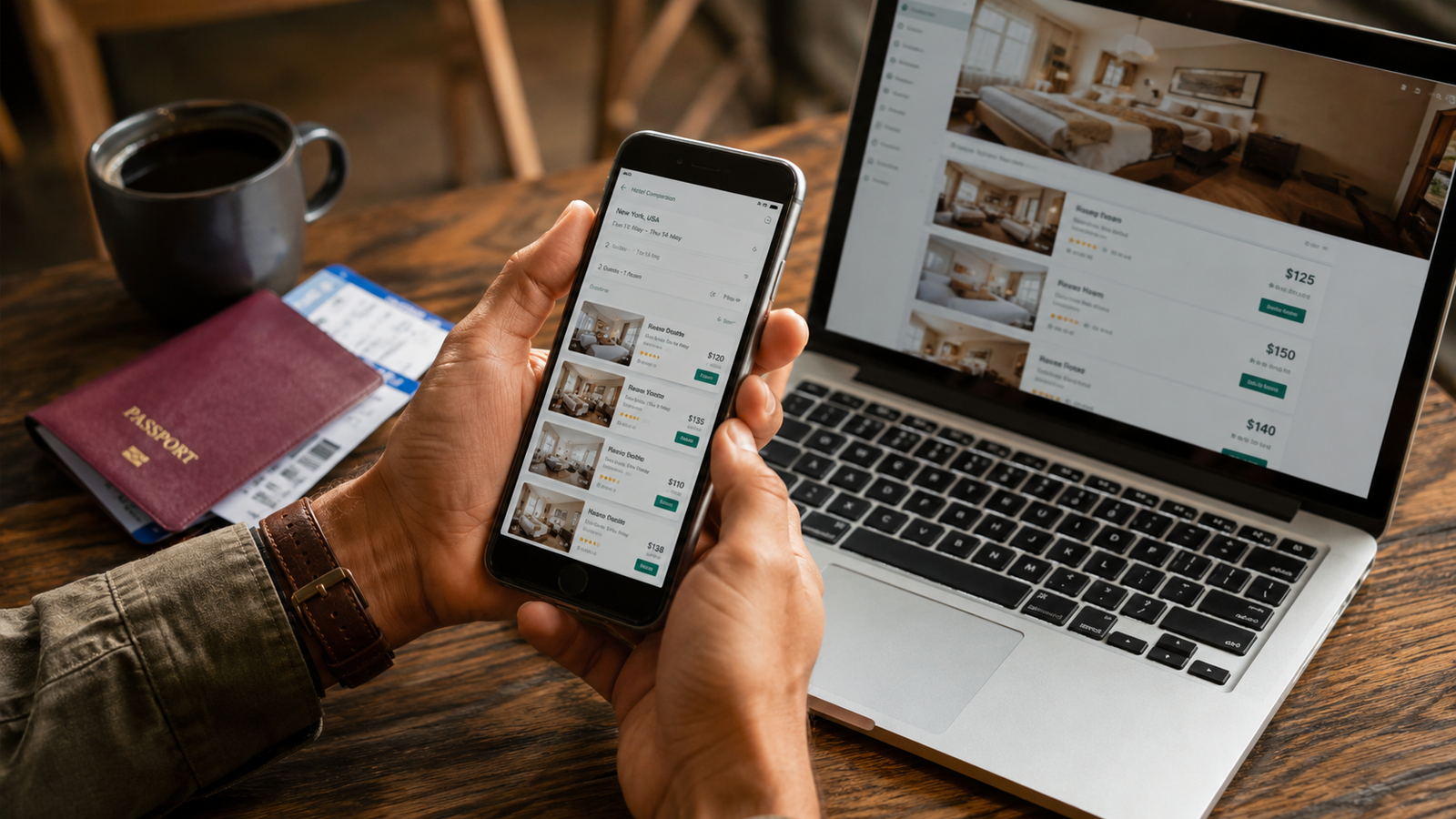
Metasearch engines (Trivago, Kayak, Google Hotels) don’t sell rooms themselves — they scan prices across other booking sites for a specific room and show you the spread side by side. You click through and complete the booking wherever you found the best price.
Direct booking sites / OTAs (Booking.com, Expedia, Hotels.com) sell rooms directly, have their own inventory relationships with hotels, and typically run their own loyalty programs.
Understanding this split is the single most useful thing to know before comparing any of them — metasearch and OTAs solve different problems, and using one instead of the other for the wrong task is where most people leave money on the table.
Full Platform Breakdown
| Platform | Type | Best for | Loyalty program |
|---|---|---|---|
| Trivago | Metasearch | Confirming the best price on a specific hotel across sellers | None |
| Kayak | Metasearch | Planning a full trip (flights + hotel + car) in one search | None |
| Google Hotels | Metasearch (built into Search/Maps) | A quick price check while already searching for a hotel by name | None |
| Booking.com | OTA | Broad hotel inventory, especially independent properties, clear cancellation terms | Genius tier (per-booking discounts) |
| Expedia | OTA | Bundling flight + hotel for package discounts | Expedia Rewards (points-based) |
| Hotels.com | OTA | Frequent bookers wanting a stay-based free-night reward | Stay-based (free night after set number of stays) |
When to Use Which (The Practical Workflow)
- Start broad if you haven’t picked a hotel yet. Kayak or Booking.com’s search are good starting points for browsing options in a destination, since they show a wide range of properties rather than requiring you to already know what you want.
- Narrow to a specific hotel. Once you’ve found a property you like — through a guide like this one, a recommendation, or browsing an OTA — you have a specific room to compare.
- Run that specific hotel through a metasearch tool before booking. This is the step most people skip. Trivago, Kayak, or Google Hotels will show you whether the OTA you’re about to book through actually has the best price, or whether another seller (sometimes the hotel’s own website) is cheaper for the exact same room.
- Book through whichever seller has the best price for your situation — factoring in not just the headline rate but cancellation flexibility and any loyalty points you’re building toward.
A Few Things Worth Knowing Across All Platforms
- None of the metasearch tools charge you directly — they earn commission from the booking sites when you click through and book, which is why the price you see should match what you’d pay booking directly (though it’s always worth a final check at checkout).
- Loyalty program value only matters if you book consistently through one platform. Occasional travelers see little benefit from any of these programs; frequent bookers should pick one OTA and stick with it to let rewards compound.
- Prices can differ by browser session or device on some platforms due to dynamic pricing — checking in an incognito/private window occasionally reveals a different (sometimes lower) price than your regular browsing session.
The Bottom Line
Metasearch tools (Trivago, Kayak, Google Hotels) and OTAs (Booking.com, Expedia, Hotels.com) aren’t competitors — they’re complementary steps in the same booking process. Browse and pick a hotel through an OTA or a destination guide, then always run that specific hotel through a metasearch comparison before hitting confirm. That two-step habit is the single most reliable way to avoid overpaying, regardless of which specific platforms you end up using.