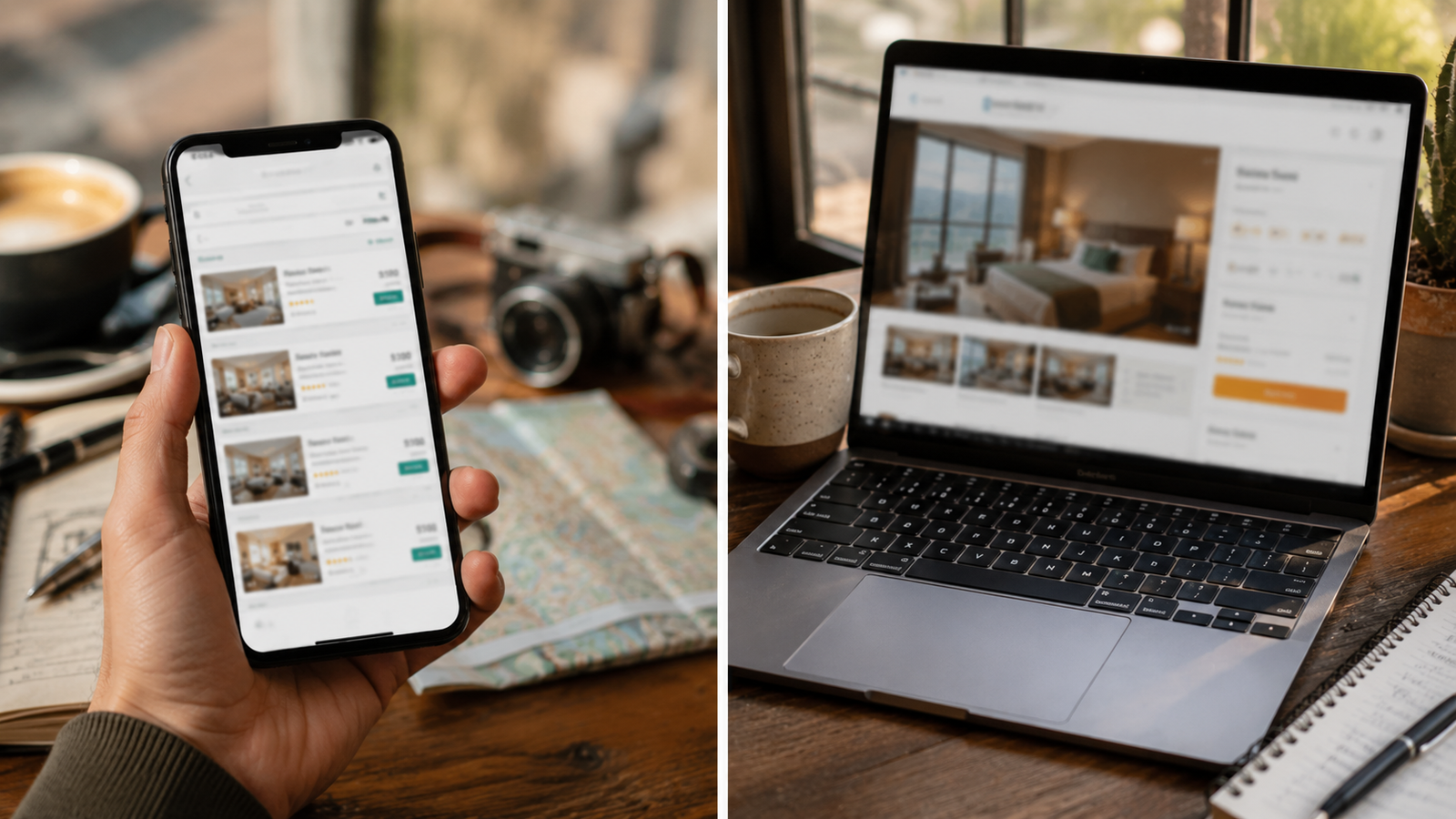

Hotel prices for the exact same room can swing by 30–40% depending on when you book, which site you book through, and even what device you’re browsing on. Most of that swing is avoidable once you know what actually moves the price. Here’s what consistently works.
1. Book at the Right Time — Not Just “Early”
“Book early” isn’t always true. It depends on the destination:
- City hotels (business-heavy destinations like London, New York, Singapore) often have their best prices 1–3 weeks out, once business travel demand is clearer.
- Resort and leisure destinations (Bali, the Maldives, Cancun) reward booking further out — 2–4 months ahead — since rooms sell out for peak season.
- Weekend getaways are usually cheaper if you can shift by even one day — Sunday–Monday stays are often noticeably less than Friday–Saturday in the same city.
If you’re not sure which category your trip falls into, start checking prices about 6–8 weeks out and track how they move for a week or two before booking.
2. Use a Comparison Tool Before You Book — Not Instead of Booking
This is the step most people skip. Once you’ve picked a hotel (through a guide, a recommendation, or an OTA like Booking.com), run that specific hotel through a metasearch/comparison tool before confirming. These tools scan multiple booking sites for the same room and show you the spread side by side, which is often the fastest way to catch a cheaper listing you’d have otherwise missed. We cover exactly how this works in [Trivago vs Booking.com: Which Gives You the Better Hotel Deal?].
3. Clear Cookies or Use Incognito Mode Before Searching
Some booking sites adjust prices based on browsing history — if you’ve searched the same hotel five times, certain sites may nudge the displayed price up slightly to create urgency. Searching in a private/incognito window, or clearing cookies first, removes that variable and shows you a cleaner baseline price.
4. Check the Hotel’s Own Website Too
Many hotels — especially independent and boutique properties — offer a “best rate guarantee” or a small direct-booking discount if you book through their own site instead of an OTA. It’s worth a 30-second check even if you found the listing elsewhere first.
5. Look at Refundable vs. Non-Refundable Pricing Carefully
Non-refundable rates are usually cheaper, sometimes by 10–15%, but only make sense if your plans are locked in. If there’s any chance your dates could shift, the refundable rate is often worth the small premium — cancelling and rebooking a non-refundable reservation typically means losing the full amount.
6. Consider Shoulder Dates Around Your Trip
If your travel dates are flexible by even a day or two, checking prices for the days just before or after your target dates can reveal meaningful savings — particularly around weekends, holidays, and local events you might not know are happening.
7. Watch for Local Events Driving Prices Up
A city’s hotel prices can spike sharply around conferences, festivals, or sports events — sometimes doubling for the same room that’s normally affordable. A quick search for “[city] events [your travel month]” before booking can explain an unusually high price and help you decide whether to shift dates or just budget for it.
The Bottom Line
There’s no single trick that guarantees the lowest price every time — it’s a combination of timing your booking window correctly, cross-checking the specific hotel through a comparison tool before confirming, and paying attention to a few small details (cookies, refund terms, shoulder dates) that most travelers skip. Do even three or four of these consistently and the savings add up fast.